Join The Ultimate And Irreplaceable Experience Now.
Just define your interests, We will promote the best investment opportunities for you
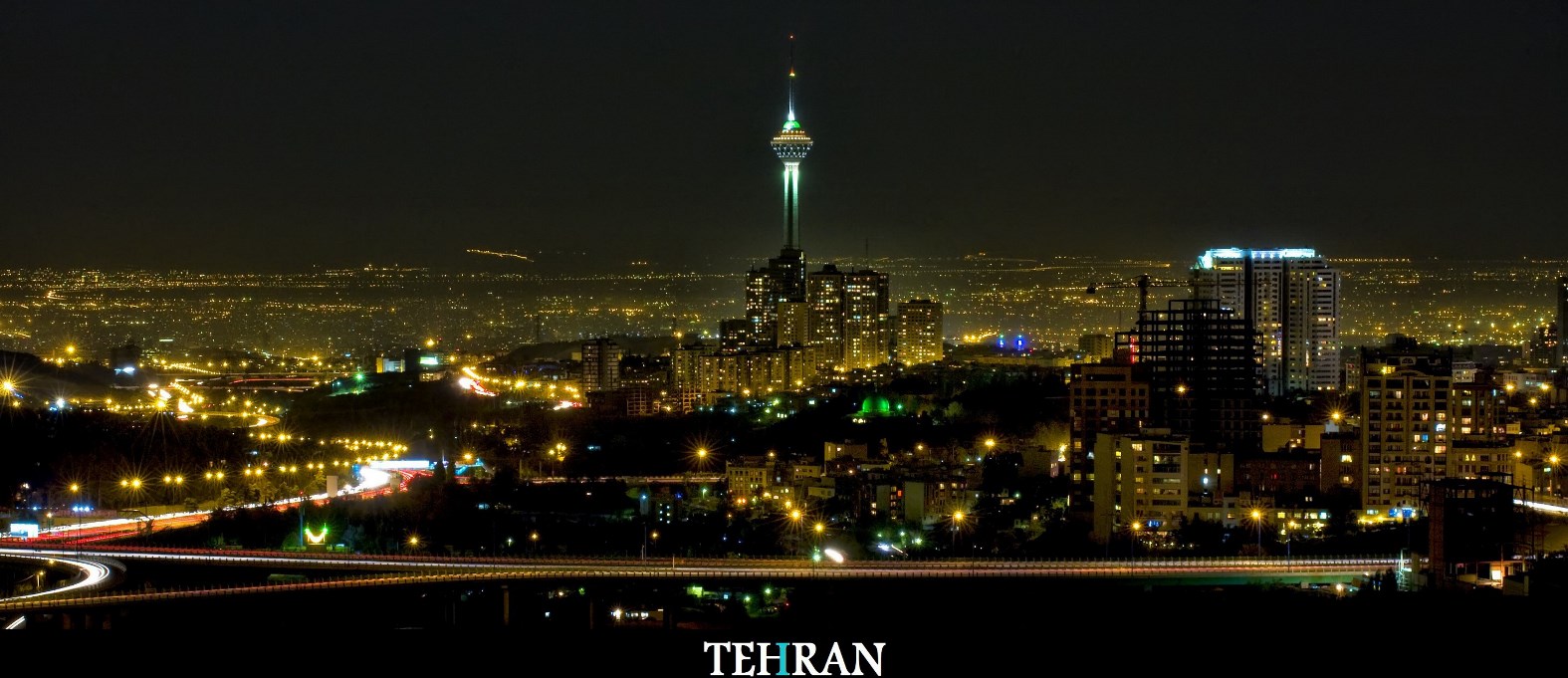
Iran qualifies from many respects to be a good location for investment and doing business. it has huge potential for investing after the termination of economic sanctions, Some of the features are highlighted below:
1. Vast domestic market with a population of 80 million growing steadily
2. Young, educated and cheap labor force
3. Excellent strategic geographical position
4. The quick and easy access to neighboring markets with a population of 350 to 400 million
5. Developed and ready infrastructure
6. Cheap and abundant raw materials, energy and transportation
7. The four-season climate and climate variability in the country
8. Fiscal incentives
9. Security and political stability
10. Untapped and consumer market ..

In a meeting with head of Alborz Chamber of Commerce, Branko Markoric put the volume of Serbian trade with Iran at $20 million last year.
Referring to the two countries’ tourism capacities, he also said that Serbia favors to sign an agreement with Iran on tourism.
The country is keen on undertaking construction projects with Iranian companies, he said.
Serbian charge d’affaires also said that his country can serve as a gateway for export of Iran’s products to other countries.
Head of Alborz Chamber of Commerce Rahim Bana-Moalei, for his part, said that Alborz province boasts of numerous industrial and commercial capacities and welcomes exchanges with the country.
The province is fully ready to develop cooperation with the other countries’ economic activists, he said.

“We are surprised by the growth of the handicraft industry over the past two years. Now, over 170 portals offer Iranian-made handicrafts,” he added.
At the meeting, Sa’eed Mohammadi, co-founder of Digikala, the biggest online shopping store in Iran, talked about challenges of online selling of handicrafts.
Digikala started offering handicraft items in April 2015 and it was welcomed by visitors, he said, according to Tehran Times.
“Most of our visitors are young people and unfortunately they are not familiar with different kinds of handicraft. So, we initiated some small campaigns to introduce this art to younger generation,” he said.
He lamented the mismanagement in the handicraft market, saying that some workshops do not have any plans to diversify their products and some do not even issue invoice for buyers.
“We initiated a campaign titled Made in Iran on our website to promote Iranian-made products,” he added.
At the meeting, Narges Shayegh, the director of Aranick portal, which offers Iranian handicrafts, also touched on some problems she is facing for online marketing of handicrafts.
“We have problems for sending handicraft products via the mail service to other cities. Some items are broken when they are received by customers,” she said.
Iranians who live in other countries welcome the website saying that they have received several orders from different parts of the world, she added.
Meanwhile, the director of CHTHO’s handicraft exports department Pouya Mahmoudian, said for his part, that CHTHO plans to support the development of handicraft portals.

A spokesman for Economy Minister Sigmar Gabriel said export guarantees were now permitted again though some other issues had to be settled first such as payment of outstanding liabilities.
Berlin is in constructive talks with Tehran on that issue, the spokesman added.
The so-called Hermes guarantees have become a pillar of Germany’s export industry, offering security to companies and banks that do business in markets classified as posing a risk of non-payment.
Firms are eligible to receive such a guarantee if more than half of a product’s components are made locally, but industry and banking groups have called on the government to extend the scope of the system.
The guarantees were originally introduced in 1949 for cases where firms could find no private insurance. In 2014, some €24.8 billion ($27.01 billion) worth of exports were backed by Hermes guarantees.
Exports used to be a major driver of growth in Europe’s largest economy, accounting for about 40 percent of GDP.
However, a slowdown in China and other emerging markets dampened export growth in 2015, letting private consumption and state spending take over as the main propellants.
The DIHK Chambers of Commerce and Industry expects German exports to Iran to double to €5 billion ($5.5 billion) in coming years and reach twice that figure in the longer term.
German machinery, car, chemicals, healthcare and renewable energy firms are likely to be the biggest beneficiaries of the opening up of the Iranian market.
Gabriel, who last July led the first top-level German government delegation to Tehran in 13 years, will head back to Iran in May to co-chair an economic conference with Iranian counterpart Ali Tayyebnia.

Terstal, upon a Monday visit to RIPI, highlighted the sanctions relief on Iran’s nuclear agenda, hailing RIPI’s facilities, achievements and potentialities as impressive, according to the RIPI website.
She said Dutch research institutions began their interactions with RIPI over the course of the past two months and they are ready to boost them now that the international restrictions have eased on Iran.
She said RIPI’s cooperation with Delft University is a sign of Netherlands’s seriousness to join petroleum research projects in Iran, Shana reported.
“I enjoyed an interesting visit and learned a lot about how oil is produced in Iran,” wrote Terstal in a memorial note at the end of the visit.
During her visit, the Dutch ambassador to Iran also visited RIPI’s upstream and downstream faculties.

He said Tehran and Prague can cooperate in infrastructure projects including road, marine, airport, and railroad transportations.
‘We welcome foreign investment in transportation projects,’ he added.
The Czech minister referred to the history of industrial cooperation between his country and Iran and stressed enhancement of ties following removal of sanctions.
Mladek is heading a 60-member trade and economic delegation during his visit to Iran.

While the European enterprises may be the first to benefit from the opening of Iran’s doors to the world, some are speculating that US corporations can also venture into the Iranian market through their EU offshoots.
The US is keeping most of its sanctions on Iran in place. That means US citizens and businesses still can’t do business in Iran, said CNNMoney in a report.
The sanctions that were dropped over the weekend were mostly to allow non-US citizens and businesses the ability to head to Iran without fear of American penalties.
“This will make American firms the biggest loser of the nuclear deal,” Majid Rafizadeh, a Middle East scholar at Harvard, told CNNMoney.
Nevertheless, the deal does allow the US to import Iranian carpets, caviar and pistachios.
On the flip side, the US can also now export commercial planes to Iran, which should be a boost to Boeing, the report added.
Medicines and some consumer technology products are also allowed to be exported, although most businesses need a waiver from the US Treasury’s Office of Foreign Assets Control before they ship anything to Iran.
Still, American titans like McDonald’s or Apple are left in a very awkward place by the deal, the CNNMoney added. But it emphasized that the doors to US enterprises for entering the Iranian market is not completely closed.
“If a company like Apple or HP wants to get involved with Iran, it would have to do it with their foreign subsidiaries,” explains Patrick Clawson, research director at the Washington Institute for Near East Policy. But even then, “they have to establish a very clear line so their foreign subsidiaries aren’t reporting to any American national.”
In short, Americans can’t be involved in the decision making or business deals.
“This whole issue is going to be a big compliance headache,” Farhad Alavi of the Akrivis Law Group has told CNNMoney.

The organization advises countries on energy policy. It said in its monthly report Tuesday that excess global supply may reach 1.5 million barrels per day during the first half of the year.
U.S. crude prices have fallen about 20 percent since the beginning of the year, AP reported. Many oil companies, including Chevron and BP, have cut jobs and reduced spending to save money.
The IEA noted mild temperatures at the outset of winter in the U.S., Japan and Europe lowered demand for oil. More crude from Iran could boost global supplies further.

Schwab presented a brief report on this round of talks in Davos.
IRNA reporter in Davos said that head of Presidential Office Mohammad Nahavandian was also present in the meeting.
Shwab highlighted capacities of the WEF for development of economic and commercial cooperation, expressing pleasure with Iran’s new economic situation in the wake of implementation of Joint Comprehensive Plan of Action.
Schwab expressed hope that considering Iran’s abilities in different fields, the Forum’s potentials would be utilized for Iranian economic development.

Hossein Yaqoubi Miab, the director for the international affairs of the Central Bank of Iran (CBI), said the ICBC has specifically requested its branches to be established in the free trade zone of the Kish Island as well as Iran’s mainland.
Yaqoubi Miab said similar requests have also been presented to Iran over the past few days by banks from Austria, Italy and Lebanon. This, he emphasized, shows that the environment is already prepared for investments in the Iranian economy after the recent removal of sanctions against the country. “The Central Bank of Iran (CBI) encourages such initiatives [by international banks],” the official added.
He further said that the presence of foreign banks will help enhance Iran’s expertise over technical issues relating to the banking and financial services besides many other important advantages.
This past Saturday, the economic sanctions against Iran were lifted after a nuclear deal that the country had sealed last year with the P5+1 group of countries – the five permanent members of the Security Council plus Germany – was implemented.
A central theme of the sanctions that have now been removed was restrictions on banking transactions with Iran.
Iran has already emphasized that it welcomes the opening of foreign banks in the country. In 2008, it put into effect a much-awaited privatization law which allows the normal functioning of foreign banks in the country. Accordingly, the government of former president Mahmoud Ahmadinejad (2005-2013) determined the rules for regulating the activities of foreign banks later in 2009.

Given the accessibility to surrounding areas, local people started to expand their presence. As a result, Arabs and Persians built a prototype global trade system and facilitated cultural exchanges.
Thanks to such trans-continental communication, the Middle East also embraced prosperity and progress.
The ancient Silk Road finally came into being after arduous efforts of the ancients thanks to an “invisible hand” of free trade, which still shapes the modern economy. The hand virtually fuels the construction of the Silk Road Economic Belt and the 21st Century Maritime Silk Road, an initiative put forward by China on the basis of the ancient route.
Nowadays, Middle East merchants are no strangers to China’s most developed business cities and Chinese businessmen have a fair share in Middle East markets.
Since the discovery of oil in the Middle East, the world “intersection” has been turned into a “source of conflicts.” World powers interfered Middle East affairs either with their condescending attitudes or so-called strategies.
While nonstop turbulence and disputes blocked the region’s development, people living there have a strong desire for peace and stability.
As the only major country that maintains friendship with all Mideast states, China respects the sovereignty, territorial integrity and history of the countries and values the aspiration of their people, which is the key to the Sino-Mideast friendship.
China is also among the top three trade partners of Saudi Arabia, Egypt and Iran, which implies that it is necessary for China and the Middle East to seek win-win cooperation by realizing the Road and Belt initiative and docking development strategies.
Undoubtedly, tremendous changes will take place along the ancient land once China’s initiative is realized.
If the ancient Silk Road can be described as the first attempt of the human race to communicate beyond culture and institutions, in the new era, China, the Middle East and other nations in the world should join efforts to revitalize the route.
Italy’s Carlo Maresca on Saturday signed a $100-million contract with the Iranian organization to construct a solar power plant near Garmsar Special Economic Zone in the central province of Semnan. As per the deal, a 100-megawatt will be built on a 2,000-hectare area within 15 months, IDRO’s official website reported….
Iran says credit line with Russia to boost trade Iran’s Minister of Economy and Financial Affairs Masoud Karbasian. Iran says it expects a recent agreement with Russia over the creation of a credit line to fund Iranian projects to help promote trade between the two countries. Iran’s Minister of Economy…
Iran huge rise in imports from Europe Iran has reported a major rise in imports from several key European countries over a period of nine months starting 21 March 2017. As Iran is celebrating the second anniversary of the removal of sanctions, figures show the country’s imports have been picking…
Iran opens third DRI steel mill using domestic technology Neyriz Steel Complex at the time of commissioning. Iran has brought online its third steel plant which uses domestic technology for production of direct reduced iron (DRI) or sponge iron. The hot commissioning of Neyriz Steel Complex in the southern Fars…
With better risk rating, Iran now stands next to Brazil The Organization for Economic Cooperation and Development (OECD) has improved Iran’s risk rating by one notch. Iran’s media are reporting that the country’s risk classification has improved by one notch in a vital sign of improved investment environment. The English-language…
PSA invites Iran Khodro to produce Peugeots in Algeria Iran Khodro logo French carmaker PSA Group has invited Iran Khodro (IKCO) to set up a production line for Peugeot cars in Algeria, the Islamic Republic News Agency (IRNA) reports. PSA executive vice-president for purchasing, Yannick Bézard, on Tuesday visited Tehran-based…
Just define your interests, We will promote the best investment opportunities for you


