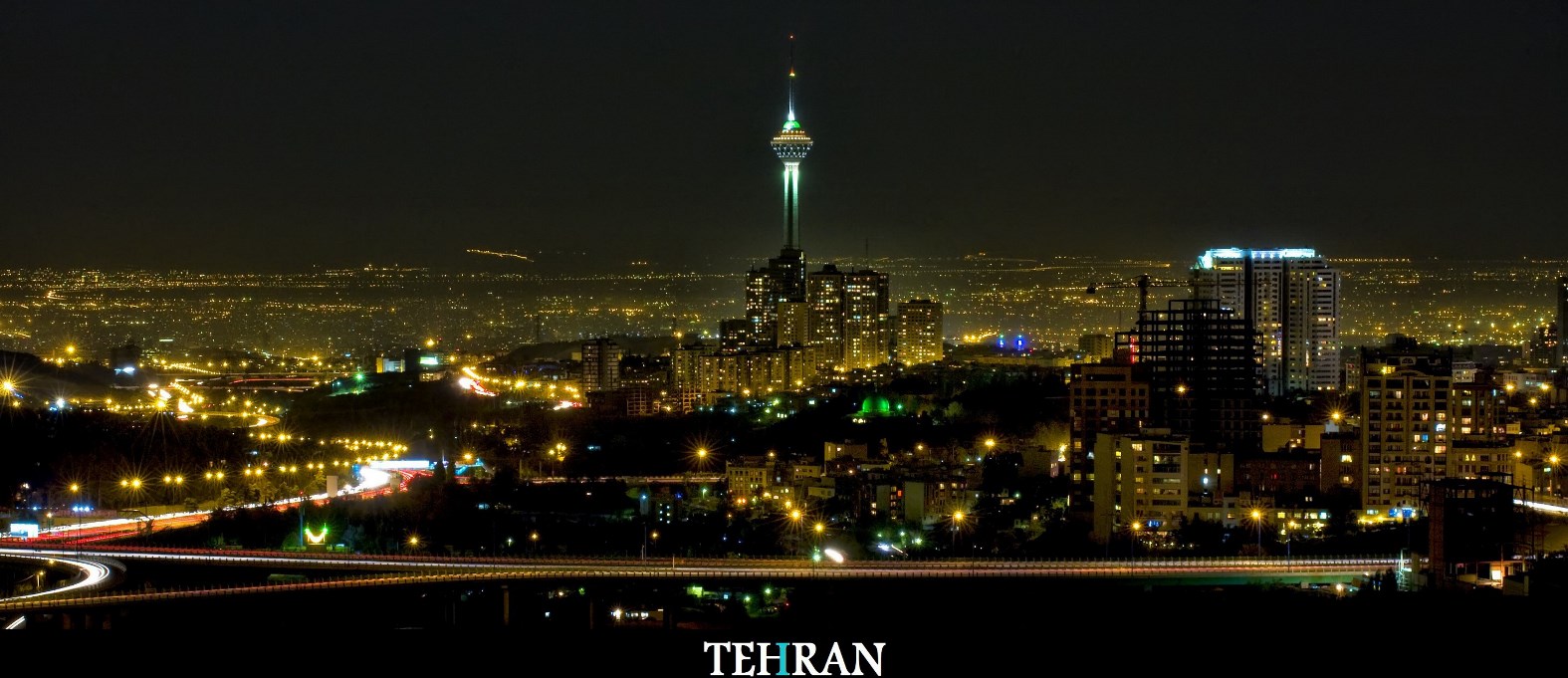
Reconnecting Tehran to the global economy set to have huge ramifications for the global economy, especially the oil market
Iran qualifies from many respects to be a good location for investment and doing business. it has huge potential for investing after the termination of economic sanctions, Some of the features are highlighted below:
1. Vast domestic market with a population of 80 million growing steadily
2. Young, educated and cheap labor force
3. Excellent strategic geographical position
4. The quick and easy access to neighboring markets with a population of 350 to 400 million
5. Developed and ready infrastructure
6. Cheap and abundant raw materials, energy and transportation
7. The four-season climate and climate variability in the country
8. Fiscal incentives
9. Security and political stability
10. Untapped and consumer market ..

The specialist trade financing bank said in a statement it plans to sign the agreement during the current quarter to support contracts that South Korean companies win from Iran in sectors including power generation, construction and steel-making.
The statement was issued while the Ministry of Trade, Industry and Energy of South Korea has already announced that it will lift all bans toward relations with Iran as soon as the ‘Implementation Day’ starts.
Seoul hopes that lifting anti-Iran sanctions would lead to create newer and more proper opportunities for the South Korean companies to develop trade exchange with the Iranian side.
The IAEA Director General Yukiya Amano released a report on January 16 verifying nuclear program in Iran.
Then, the US and the European Union lifted anti-Iran sanctions and the implementation of the July 14 nuclear agreement known as the Joint Comprehensive Plan of Action (JCPOA) started as Iranian Foreign Minister Mohammad Javad Zarif and European Union foreign policy chief Federica Mogherini issued a joint statement announcing the ‘Implementation Day’.

Francis Maude, UK’s minister for trade and investment, said the UK government fully supports expanding trade with Iran, UK’s Export Credit Agency said in a press release on Sunday.
The United States and European nations lifted oil and financial sanctions on Iran and released billions of dollars of its assets after international inspectors concluded that the country had followed through on promises to dismantle large sections of its nuclear program.
“We would encourage UK businesses to take advantage of the commercial opportunities that will arise from sanctions relief,” he said.
UKTI now has a presence on the ground to support trade between the two countries, Maude added.
“UK Trade and Investment and UK Export Finance will be leading the government approach to engage with UK companies to ensure that we are well equipped to benefit from increased trade with Iran as the country re-establishes itself within the international business community.”
To improve UK-Iran trade, UKEF will work directly with the Export Guarantee Fund of Iran and the Iranian Ministry of Economic Affairs and Finance.
The cover is now available on a case-by-case basis in pounds sterling and euros, to guarantee payments to UK professional advisory service providers advising the government of Iran. This can cover advice on areas such as: accounting standards; capital market development; compliance with global regulatory requirements; accessing and reducing the cost of financing; and facilitating new trade.
UKEF will also consider applications for direct lending to purchasers of British exports to Iran, Financial Tribune reported.
Previously, the UK had between £400-500 million ($600-700 million) in direct exports, and about as much in indirect exports.
Iran imported $614 million worth of goods from Britain during the past Iranian year (ended March 20, 2015), while it exported commodities worth $72 million, according to data provided by Iran’s Customs Organization. The imports mostly included medicine, medical equipment and grains, while the main exports were steel and iron products, hand-woven carpet, saffron, date and raisins.

Invest In Iran’s Stock Market with incredible money making potential

Addressing the closing ceremony of the International Investment Opportunities Summit in Creative City of Isfahan late on Thursday, Ashton Flooring, representative of German Company, said that Germany boasts of big experience in producing clean energies and is interested to present the technology to the entire world.
Describing the sun as divine valuable gift bestowed on mankind, he said that the great source of energy is available to the mankind for free.
Despite Iran’s access to fossil fuels, it has supported the law for clean energies and is seeking to take advantage of clean energies, he said.
Referring to Isfahan province’s suitable climatic situation, the German expert said that the province has the best conditions for establishing solar power plant.
Solar power plants are environment-friendly, he said, noting that one kilowatt sunlight produces 2,000 kilowatts of clean energy and prevents emission of 1,200 kilograms of dioxide carbon, he said.
The two-day International Investment Opportunities Summit in Creative City of Isfahan was attended by 40 economic delegations from Kuwait, UAE, Turkey, South Korea, Spain, Georgia, Switzerland, Germany, Iraq, Oman, Austria, China, Afghanistan, Poland, Canada, Russia and Greece as well as two political delegations from Spain and Austria.

He made the remarks in his work office in Jakarta on Thursday while receiving Iran’s Ambassador to Indonesia Valiollah Mohammadi and a number of directors of Iranian companies active in infrastructural projects.
Deputy Foreign Minister of Indonesia Abdurrahman Mohammad Fachir also attended the meeting.
Referring to constructive and growing relations between the two countries in different fields, Jusuf Kalla expressed his country’s interests for cooperation with Iran in infrastructural projects.
He said that Indonesia’s development planning basically focuses on infrastructures.
In this direction, Indonesia wants to increase 35,000 megawatts of electricity to its electric generation capacity in next five years.
Kalla said that government has plans to build freeways in other islands of the country as well as construction of one million small houses for low income people.
He expressed hope that the Iranian companies would participate in these projects.
Referring to good relations between the two countries, Valiollah Mohammadi presented explanations concerning abilities and capacities of Iran in different fields of energy, electricity generating power plants, construction of freeways and dam.
He added that Iranian the companies are ready to compete in the Indonesian market.
He also condemned terrorist event in Jakarta, capital of Indonesia, on Thursday.
Directors of Iranian companies attending the meeting explained their respective companies’ capabilities in different fields of construction of electric power plants, construction of dam, freeways, offering engineering and technical services, construction of water and waste water management system, exporting different types of agricultural corps, energy, marine installations.
Kalla and Mohammadi also answered questions by reporters concerning the outlook of bilateral cooperation.

Mansour Tafazzoli, the director for international affairs of Parsian Bank has been quoted by ISNA news agency as saying that talks have also been carried out to activate accounts in nine foreign banks for transactions with Iran that had so far been banned under the sanctions.
“We are ready to resume work [with foreign banks] after the implementation of the nuclear deal,” said Tafazzoli. The goal of the Iranian banks, he said, is to move ahead based on the performance of the other side in implementing its commitments.
Iran and the P5+1 group of countries – the five permanent members of the Security Council plus Germany – reached a deal last July based on which Iran will restrict certain aspects of its nuclear energy program in return for the removal of certain nuclear-related economic sanctions against the country.
A key juncture over the implementation of the deal is when the International Atomic Energy Agency (IAEA) acknowledges that Iran has carried out its share of commitments as per the nuclear deal.
An important step to the same effect is for Iran to remove the sensitive core of its Arak nuclear reactor. Iran said on Thursday that it had remove the core and that the IAEA inspectors are currently in Tehran to verify the move later in the day.
Valiollah Seif, the governor of the Central Bank of Iran (CBI), said earlier this week the CBI has started the proceedings for the much-awaited unfreezing of a total of around $30 billion that belong to Iran but have been blocked in overseas banks as a result of the sanctions.
Seif said the money could be made available to the CBI as early as next week.
He further added that unfreezing the dollars to Iran as well as the opening of blocked banking channels will be positive news for Iran and will accordingly show its effects on the Iranian economy.
Reconnecting Tehran to the global economy set to have huge ramifications for the global economy, especially the oil market

The European Union and US are expected to formally lift sanctions against Iran this weekend, dismantling an intricate network of punitive measures built up over nearly a decade and reconnecting Tehran to the global economy.
The lifting of sanctions, which will include an end to an EU embargo on the imports of Iranian oil, will have huge ramifications internationally, most notably on the global oil market as Tehran is expected to immediately add almost half a million barrels per day to its crude exports. This will affect plummeting oil prices in a market already struck by oversupply.
It is also the moment when ordinary people in Iran will start feeling the impact of the landmark nuclear accord, struck in Vienna last summer, in their everyday lives, with Iranian banks re-establishing connections with the European financial system and private firms pursuing business opportunities without fear of western punishment.
Abbas Araqchi, Iran’s deputy foreign minister and senior nuclear negotiator, said on Wednesday that the UN nuclear watchdog, the International Atomic Energy Agency (IAEA), was due on Friday to verify that Tehran had fulfilled all its obligations under the nuclear agreement, including unplugging thousands of centrifuges and significantly reducing its stockpile of low-enriched uranium.
Such a report by the IAEA will trigger the announcement of “implementation day” when the lifting of sanctions by the US and EU will come into effect and all previous nuclear-related UN resolutions will be terminated. Tehran expects this to happen on Saturday or Sunday after an expected joint statement by Iran’s foreign minister, Mohammad Javad Zarif, and the EU foreign policy chief, Federica Mogherini.
“The IAEA inspectors are supposed to issue their final report on Iran’s honouring of its commitments on Friday,” Araghchi was quoted by local news agencies as saying. He has said that the announcement of the implementation day would not go beyond Sunday but there was no confirmation on the European side.
In Washington, John Kerry, the US secretary of state, said the implementation of the nuclear deal was likely in the coming days. “As agreed, Iran is now well on its way to dismantling critical elements of its nuclear facilities,” he told an audience at the National Defense University in Washington. “Just yesterday, the foreign minister reported to me that the calandria of the plutonium nuclear reactor is now out and in the next hours it will be filled with concrete and destroyed.”
All Iran’s enriched uranium material had been shipped to to Russia for processing, he said. “That shipment that was taken out in one day more than tripled our previous timeline of two to three months for Iran to be able to acquire enough weapons grade uranium for one weapon and it is an important part of the technical equation that will bring the breakout time to at least one year for the next 10 years.
“We will ensure that the spectre of a nuclear armed Iran is removed as a threat to Middle East security and global peace, and it is not insignificant that Iran has agreed to submit to this, agreed to undertake these steps, agreed that it will not build this weapon.”
Earlier in the day, Kerry thanked Iran for the swift release of 10 US sailors captured by the Revolutionary Guards on Tuesday in the Iranian territorial waters, saying “the peaceful and efficient resolution” of the matter was “a testament to the critical role of diplomacy” between the two nations, which was unthinkable just five years ago.
A British Foreign Office spokeswoman said: “We’re still working hard to reach implementation day. Good progress is being made, but there are still areas to finalise and no date has been set.”
Ali Vaez, senior Iran analyst at International Crisis Group, said the world was facing “the most important milestone in implementing the nuclear deal, the moment of truth”.
He said: “It is the moment in which Iran will be turned from the most sanctioned country in the world into the most monitored country in the world in terms of its nuclear activity.”
Vaez said the lifting of sanctions would be particularly watched because the west had never tried to dismantle such a complex and extensive web of punitive measures. “Sanctions that have been imposed on Iran are so complicated that it is quite interesting to see how the US authorities are going to manage sanctions relief,” he said.
“Would they come up with regulations that are so complicated that would actually deter businesses from going back to Iran out of fear that there is so much red tape and it is not worth it or would they come up with detailed yet user-friendly explanation of what sanctions are going to be lifted and what will remain in place?”
Non-nuclear related US sanctions on Iran, such as those relating to terrorism, will remain in place.
Vaez predicted that the administration of Hassan Rouhani would not allow the national currency, the rial, to appreciate instantly because it wants to to inject new momentum into the country’s industrial base and its non-oil exports capability.
Ellie Geranmayeh, policy fellow at European Council on Foreign Relations (ECFR), said Tehran’s priorities were to be reconnected to the Swift network, which facilitates foreign bank transactions, and to inject cash from its frozen assets, due to be released on the implementation day, into its budget. About $30bn of Iran’s estimated $100bn in frozen assets are expected to be immediately released.
“On a global scale, Iran is showing to the world that it has fulfilled all its commitments under the nuclear deal despite all problems and, secondly, it is proving its good faith in multinational diplomacy, and the implementation day is the first test for that,” she said.
“The next phase is to see how Syria talks will go. The Iran nuclear talks have set a good precedent for Iran being able to fulfil obligations that it has signed up to, rather than those imposed on it,” she said. “Domestically, it is important for Rouhani to show he was able to deliver despite opposition and that he has the authority to implement the deal he signed up to and see the psychological boost from his constituency.”
In the immediate future, the lifting of sanctions will boost Rouhani’s profile in the run-up to next month’s parliamentary elections. Although Rouhani is serving as president for at least another two years, he is a candidate for the elections to the council of experts, which take place on the same day as the parliament poll.
“If he is allowed to sit on the experts’ council [which has the task of appointing the next supreme leader], the moderate faction including Rouhani is going to confidently say the line they pursued has yielded positive results,” Geranmayeh said.
theguardian

“In the very near future we expect delegations from the two countries to meet,” the UAE-based ‘The National’ quoted Zahid Muzzafar as saying on Wednesday.
Pakistan’s Oil and Gas Development Company is government-controlled, but has publicly traded shares on the Karachi and London exchanges.
“Once we get the right signals from the international community and our own government’s decision we are all set to build that pipeline,” Muzzafar said, referring to the expected lifting of international sanctions related to Iran’s nuclear program that have restricted its oil and gas exports since 2011. Final clearance is expected this month.
The pipeline spur would run from Pakistan’s port city of Gwadar, where it has nearly completed its first liquefied natural gas (LNG) intake plant, to Iran’s border 80 kilometers away.
Pakistan has a rapidly growing need for natural gas and is also building a pipeline from Gwadar to the middle of the country as part of a network of pipelines that will include supply via Turkmenistan–Afghanistan–Pakistan–India Pipeline, or Tapi.
Pakistan has long-term aims to be an energy transit country such as Turkey, which connects central Asian oil and gas supplies to Europe and the rest of the world via pipelines that include the one that terminates at the Mediterranean port of Ceyhan.
Pakistan’s strategy would link supplies in central Asia, including Turkmenistan, as well as Iran – which rivals Russia as the world’s largest holder of gas reserves, to the huge markets in China and India, as well as serving its own growing demand.
Muzzafar said additional supplies from Iran can be linked into the system that is being developed currently, which includes a US$2.5 billion project to complete the LNG terminal at Gwadar and pipeline it 700km to Pakistan’s mid-country, terminating at Nawabasah.
First LNG cargo was bought on the spot market from Qatar. Pakistan has tendered for 60 cargoes over five years.
Muzzafar said, and the first successful bidders were Gunvor, a Geneva-based trading house, and Royal Dutch Shell.
The China-Pakistan Economic Corridor, a $46bn multi-pronged mega project, plans to link Gwadar, Khuzdar and other western Pakistan areas via roads, rail and pipelines to Dera Ghazi Khan, Dera Ismail Khan and Peshawar in the east, and onto the western Chinese city of Kashgar, 3,000km away.

“The current setting in Iran’s petrochemical industry has created a promising prospect for investment which is a precious capital for the country,” Abdolhossein Bayat told Shana.
“The petrochemical industry is the locomotive of the country’s development,” he added, “With the arrival of new capital and the increase in financial resources, the developing industry will undergo a huge transformation.”
“It is the time that NPC forecasts the prospects and clarifies its strategies,” said the board member.
He also urged the company to build on its past experience and tap all the available capacities to achieve the long-term targets.
“It is not necessary that government involves itself in the investment projects. Rather, it can regulate and implement the policies in order to support the investors,” Bayat said.

“We have made some contacts, yes,” the Financial Times quoted head of Airbus’s passenger jet unit Fabrice Bregier as saying.
Iran has been on the radar of Airbus and other aircraft manufacturers since the country reached a nuclear accord last July. Their anticipation is finally coming to an end with the lifting of sanctions, reportedly in the few coming days.
“This is potentially a huge market for Airbus and our competitors,” Bregier said of Iran which operates an aging fleet of airplanes in dire need of renovation.
After the lifting of the sanctions, “we would have no reason not to consider Iranian airlines as a normal customer like the rest of the world,” he said.
Airbus and Boeing have a sanctions regime in place against Iran since the Islamic Revolution which toppled the US-backed shah. As a result of the embargoes, hundreds of Iranians have lost their lives in a a series of air crashes.
Iran’s first post-revolution contacts with the two leading plane manufactures came after Tehran reached an initial nuclear agreement in November 2013. Under the accord, Airbus and Boeing were allowed to provide spare parts and safety manuals to Iran.
According to Minister of Roads and Urban Development Abbas Akhoundi, Iran’s civil aviation fleet consists of 248 aircraft with an average age of 20 years, of which 100 are in storage.
This undated photo shows an Iran Aseman Airlines Airbus A320-231 taxing on the runway at Mehrabad Airport, Tehran.
The country will need to buy 500 commercial jets of various models at a cost of $50 billion and has been talking to both Airbus and Boeing to acquire aircraft under lease or sale/leaseback deals, he has said before.
“Since there is no such money in existence in Iran, we have to go after the leaseback method,” the Tasnim news agency quoted him as saying last November.
“If we try to buy new aircraft, we will need 400 jets to develop our long- and medium-haul fleet and at least 100 planes for use in our local airports which will cost $50 billion with a rule of thumb,” Akhoundi said.
As for Airbus, the minister has said the European company made up about 50% of Iran’s aviation fleet and the two sides were “in direct negotiations.’
Airbus’s Bregier said commercial discussions had not yet begun as Western companies were banned from such talks until the nuclear agreement was implemented.
Italy’s Carlo Maresca on Saturday signed a $100-million contract with the Iranian organization to construct a solar power plant near Garmsar Special Economic Zone in the central province of Semnan. As per the deal, a 100-megawatt will be built on a 2,000-hectare area within 15 months, IDRO’s official website reported….
Iran says credit line with Russia to boost trade Iran’s Minister of Economy and Financial Affairs Masoud Karbasian. Iran says it expects a recent agreement with Russia over the creation of a credit line to fund Iranian projects to help promote trade between the two countries. Iran’s Minister of Economy…
Iran huge rise in imports from Europe Iran has reported a major rise in imports from several key European countries over a period of nine months starting 21 March 2017. As Iran is celebrating the second anniversary of the removal of sanctions, figures show the country’s imports have been picking…
Iran opens third DRI steel mill using domestic technology Neyriz Steel Complex at the time of commissioning. Iran has brought online its third steel plant which uses domestic technology for production of direct reduced iron (DRI) or sponge iron. The hot commissioning of Neyriz Steel Complex in the southern Fars…
With better risk rating, Iran now stands next to Brazil The Organization for Economic Cooperation and Development (OECD) has improved Iran’s risk rating by one notch. Iran’s media are reporting that the country’s risk classification has improved by one notch in a vital sign of improved investment environment. The English-language…
PSA invites Iran Khodro to produce Peugeots in Algeria Iran Khodro logo French carmaker PSA Group has invited Iran Khodro (IKCO) to set up a production line for Peugeot cars in Algeria, the Islamic Republic News Agency (IRNA) reports. PSA executive vice-president for purchasing, Yannick Bézard, on Tuesday visited Tehran-based…
Just define your interests, We will promote the best investment opportunities for you


