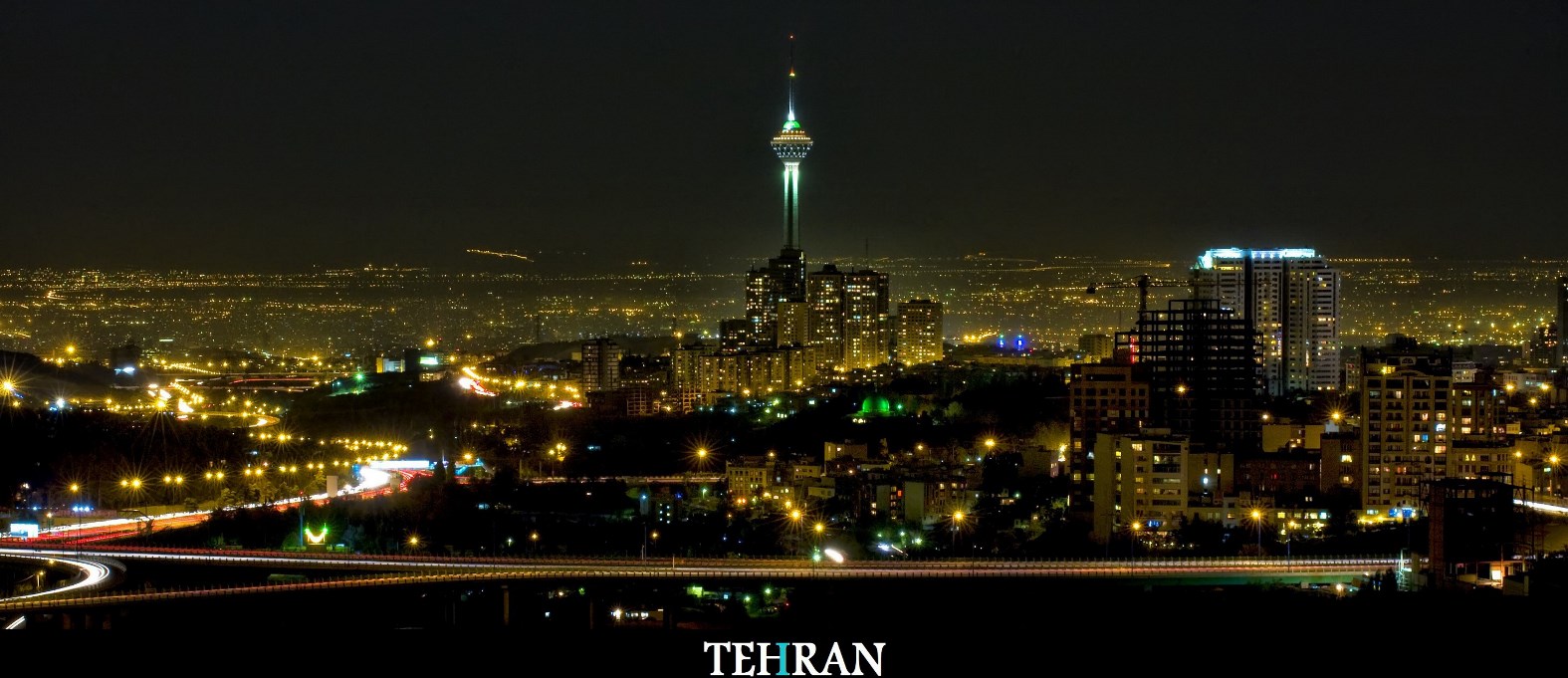
Join The Ultimate And Irreplaceable Experience Now.
Just define your interests, We will promote the best investment opportunities for you
Iran qualifies from many respects to be a good location for investment and doing business. it has huge potential for investing after the termination of economic sanctions, Some of the features are highlighted below:
1. Vast domestic market with a population of 80 million growing steadily
2. Young, educated and cheap labor force
3. Excellent strategic geographical position
4. The quick and easy access to neighboring markets with a population of 350 to 400 million
5. Developed and ready infrastructure
6. Cheap and abundant raw materials, energy and transportation
7. The four-season climate and climate variability in the country
8. Fiscal incentives
9. Security and political stability
10. Untapped and consumer market ..

Abdullah was welcomed on his arrival in Chabahar airport by Sistan and Baluchestan governor, officials, Ulema and local seniors.
Chabahar is a free port (Free Trade Zone) on the coast of the Gulf of Oman.
Abdullah is scheduled to participate in two meetings with economic officials and activists.
Abdullah is also going to take part and give a speech in a meeting held in Islamic Azad University of Chabahar.
Free zone director, Chabahar’s governor, general managers of ports and maritime administrations and fishery officials are present in this meeting.
He will also have a meeting with Afghan economic activists held in Kosar Hall.
General director of Sistan and Baluchestan Ports and Maritime Organization, Siavash Rezvani said on Wednesday that Abdullah will visit port and infrastructure development projects, capabilities and potentials of one of the biggest ports in Iran.
Rezvani said that Chabahar port has a capacity of loading and unloading 2.5m tons products.
He added that 95 percent of Afghanistan’s requirements is fulfilled through sea and land.
Afghanistan is one of Iran’s neighboring countries which regards Chabahar port as one of the international waterways.
Chabahar port together with Chabahar-Milk-Zaranj transit way is very important in developing trade and transit and in cross-border transactions.
Abdollah arrived in Tehran on Monday afternoon for a 3-day visit.

Malaysia Airlines is flying between Kuala Lumpur and Europe over Iran rather than a more roundabout route over Egypt for the first time since October, just a day after it said it was unable to carry checked baggage because of strong headwinds on the Egypt route, according to The Sydney Morning Herald.
‘We have been operating over the last few months via Egypt. That was in response to the threat of the Russian missile activity over the Caspian Sea,’ Malaysia Airlines chief operations officer Peter Bellew told The Australian Financial Review on Wednesday.
‘The information we had a week ago was the risk assessment showed we were better off taking the route via Egypt. The risk assessment now shows flying over Iran is fine. It is a fluid situation.’

According to the schedule, the visit will take place in May 2016.
The ambassador made the statement in a meeting with the chairman of IMIDRO (Iranian Mines and Mining Industries Development and Renovation Organization) board Mehdi Karbasian.
According to IMIDRO public relations office, Australian Chamber of Commerce has decided to establish an economic office in Tehran.
“Australian government and economic firms are well-aware of Iran’s economic investment opportunities; Iran’s markets has special attractions to our investors,” said the ambassador. “Firms of only few countries such as Brazil, Canada, and the US could equal Australian companies in mining sector in magnitude and scope of activity; hence, they could bring about huge improvements to mining relations with Iran as well.”
Karbasian, for his part, said that “we want to invite officials and top managers of major Australian firms to attend professional Iron and Steel Conferences and also to attend Iran Mines and Mining Industries Summit (IMIS) 2016 which will be held in February.”
“Cooperation with Australian partners on information, research, technology transfer, and development in mining sector is a priority; Australian companies should decide on whether they would come to Iranian markets to survive the competition with European and Asian companies,” he said.

Majid-Reza Hariri, the deputy head of Iran-China Joint Chamber of Commerce, has been quoted by the media as saying that the two countries are in early talks over the scheme, adding that they yet need to work out its related technicalities.
Hariri said it is not clear which specific model of currency swap China plans to use for its trade activities with Iran.
He said the payments in yuan will both help strengthen the Chinese currency against the dollar and will also help Iran dodge the limitations that the sanctions have created. Nevertheless, both Tehran and Beijing still have a long road ahead to turn into a working mechanism, the official added.
On a related front, Ali-Asqar Haji, Iran’s ambassador to China, told reporters last week that the Islamic Republic has just received the text of the agreement of swapping currencies with China. Haji said Tehran is determined to make this mechanism operational and will try to prepare the grounds for its implementation. He further emphasized that the agreement could be signed – among many other documents – during an upcoming state visit by the Chinese President Xi Jinping to Tehran.
China reportedly owes Iran over $20 billion in outstanding oil payments. The cash has been frozen in overseas banks after the US-led sanctions made it difficult for Beijing to transfer money to Tehran. Accordingly, the two countries have reportedly reached a deal to settle a part of the frozen money through China’s funding of Iranian petrochemical projects.
Iran said this past Friday that China has started the proceedings to provide funds as much as €16 billion for the development of Iran’s petrochemical projects. However, the red-tape should be largely blamed for the delay in China’s provision of financial facilities to Iran’s petrochemical projects, said Amir Hassan Fallah, the director for investment affairs of Iran’s National Petrochemical Company (NPC).

“In order for the materialization of the targets set in 2026 Perspective Plan, Iran will need at least 581 planes,” said Maqsood Samani, the secretary of the Association of Iranian Airlines. This number of planes, Samani said, will be necessary to answer the passenger needs given that the demand for air travels as well as the transportation of cargoes by planes will surge in the near future.
The official further added that the share of air cargo transportation in Iran currently stands at below 0.2 percent, suggesting that a significant increase in the figure is necessary to boost the country’s economic activities.
Airways News website reported in December 2015 that Iran is expected to order 450 new airplanes over the next five years.
It added that 400 of the new planes will be for mainline services, adding that 150 of them will be used for widebody services. The remaining 50 will be used for regional purposes and will be mostly turboprops.
Airways News added that demand for international flights that would require wide body aircraft will specifically rise.
On a related front, aviation industrialists have been speculating lately that the removal of sanctions against Iran will put pressure on major Middle East carriers, creating new competition for those who have built a business on connecting regional and international traffic.
Leading regional airlines like Emirates, Etihad Airways and Qatar Airways will specifically find themselves in intense rivalry as a result of the opening that will be created in Iran’s aviation market, reported the Gulf News last week.
Analysts agree that Iran will be a growth market in 2016 but with thousands on backorder at the major manufacturers, the Iranian carriers will likely lease aircraft in the near term.
To counter this, the leading regional airlines will have to buy some aircraft and other carriers will have to refurb cabins to retain and attract new passengers, added the report by Gulf News.
Russian major airplane makers have already voiced readiness to satisfy Iran’s needs for planes. However, Mohammad Khodakarami, the deputy director of Iran’s Civil Aviation Organization (CAO) was quoted by the media as saying that domestic airlines are not interested in Russian brands. To the same effect, reports emerged in the media last year that the country has already taken steps to purchase planes from leading Western manufacturers such as Boeing and Airbus.

According to the head of the foreign trade department of Germany’s chambers of trade and commerce (DIHK), Volker Treier, there was a potential for a double-digit increase in German exports to Iran once the sanctions are lifted during the first quarter of this year.
The DIHK is aiming to break the 10-billion euro export mark in Iran over the next five to seven years, Treier said.
‘German exports to Iran could more than double to reach almost five billion euros over the next three years,’ he added.
Overall German-Iranian trade volume stood at around 2,7 billion euros in 2014.
Top German company representatives have been flocking to Iran in the wake of last year’s historic Vienna nuclear
accord, hoping to land lucrative business deals in that country.
Germany and Iran have been the scene of numerous bilateral trade conferences and business delegation visits over
the past six months.

According to Petroleum Ministry, Rokneddin Javadi added that health, safety and environment (HSE) are the key conditions of Iran’s oil industry’s cooperation with contract parties.
All foreign companies are obliged to fulfill their commitments regarding health, safety and environment transparently and seriously in Iran’s oil industry upstream development contracts, he said, adding that Iranian industrialists should hold a greater share in the implementation of oil and gas projects.
As per the country’s laws, the least share of the local parties in oil and gas projects stands at 51 percent of every oil deal, he said, noting that Iranian parties’ shares account for 65 to 68 percent of the contracts currently being implemented in the country.
Plans are also underway to raise the share of the local participants to 80 percent, Javadi said.
Transfer of know-how is another condition required for the international firms to observe in oil deals with Iran, the official said, noting that if foreign companies are keen on building their needed equipment inside Iran, they will surely be more welcomed.
In joint oil and gas companies, Iranian side can hold even 99 percent stake because Iranian companies have proved their capabilities, Javadi said.
The official also contended that development does not require only development of gas and oilfields; rather suitable infrastructure should also be prepared.
The investors are expected to employ the latest standards and technologies in the development of gas and oilfields, Javadi said, noting that Iranian oil industry’s priority is development of joint gas and oilfields.

Zareian told IRNA on Monday that some of the equipment purchased in tender has been used in Razavi Khorasan, Fars and Azerbaijan provinces.
He said that the telephone system would be equipped with new technology and people’s needs to facilitate the access to the Internet will be fulfilled consequently.
He added that the priority in cooperation with foreign countries, is in higher technology, lower prices, and full financing by companies.

Valiollah Seif, the governor of the Central Bank of Iran (CBI), in a meeting with top bankers on Saturday emphasized that they should take speedy actions to prepare for the removal of Iran sanctions, Press TV reported.
In the meeting, Seif said that Iran should prepare its banking infrastructure for post-sanctions activities and also improve their standards to better operate once the sanctions are lifted.
No date has yet been officially set on when the sanctions against Iran will be lifted. Nevertheless, officials in Tehran have already underlined that they expect this to happen in the coming weeks.
Under the current sanctions regime, Iran’s banks have been effectively shut out of the global monetary system. This will end with the removal of the sanctions when the banks, in addition to other benefits, will be able to transfer money without limits in and out of Iran. A key step to this will be for Iran to reconnect to the SWIFT financial-transactions system. Nevertheless, early signs have already appeared that such connections have already been established.
Iran’s Petrochemical Commercial Company (IPCC) announced on Saturday that it has been able to receive payments for exports of petrochemical products through an international bank in Spain.
The IPCC said this has been made possible through a so-called ‘escrow account agreement’ with the Spanish bank which has now officially opened the channel for banking transactions for export activities that had been blocked for five years as a result of sanctions.

On the sidelines of the first export transportation conference on Sunday, Torkan said that Shalamcheh and Maku export platforms have been opened and Sarakhs as well as Aras Free Zones are under construction and development respectively.
He mentioned Mehran Free Zone as the export platform to Iraq, Ardabil Free Zone as Iran’s export platform to Azerbaijan and Incheh Borun region as the export platform to Kazakhstan and Turkmenistan.
Export terminals are one of the most important professional infrastructures to export products which aim at decreasing hidden costs of export procedures and providing competitive advantages for internal production to present export services like transportation, customs, insurance, etc.
Italy’s Carlo Maresca on Saturday signed a $100-million contract with the Iranian organization to construct a solar power plant near Garmsar Special Economic Zone in the central province of Semnan. As per the deal, a 100-megawatt will be built on a 2,000-hectare area within 15 months, IDRO’s official website reported….
Iran says credit line with Russia to boost trade Iran’s Minister of Economy and Financial Affairs Masoud Karbasian. Iran says it expects a recent agreement with Russia over the creation of a credit line to fund Iranian projects to help promote trade between the two countries. Iran’s Minister of Economy…
Iran huge rise in imports from Europe Iran has reported a major rise in imports from several key European countries over a period of nine months starting 21 March 2017. As Iran is celebrating the second anniversary of the removal of sanctions, figures show the country’s imports have been picking…
Iran opens third DRI steel mill using domestic technology Neyriz Steel Complex at the time of commissioning. Iran has brought online its third steel plant which uses domestic technology for production of direct reduced iron (DRI) or sponge iron. The hot commissioning of Neyriz Steel Complex in the southern Fars…
With better risk rating, Iran now stands next to Brazil The Organization for Economic Cooperation and Development (OECD) has improved Iran’s risk rating by one notch. Iran’s media are reporting that the country’s risk classification has improved by one notch in a vital sign of improved investment environment. The English-language…
PSA invites Iran Khodro to produce Peugeots in Algeria Iran Khodro logo French carmaker PSA Group has invited Iran Khodro (IKCO) to set up a production line for Peugeot cars in Algeria, the Islamic Republic News Agency (IRNA) reports. PSA executive vice-president for purchasing, Yannick Bézard, on Tuesday visited Tehran-based…
Just define your interests, We will promote the best investment opportunities for you


