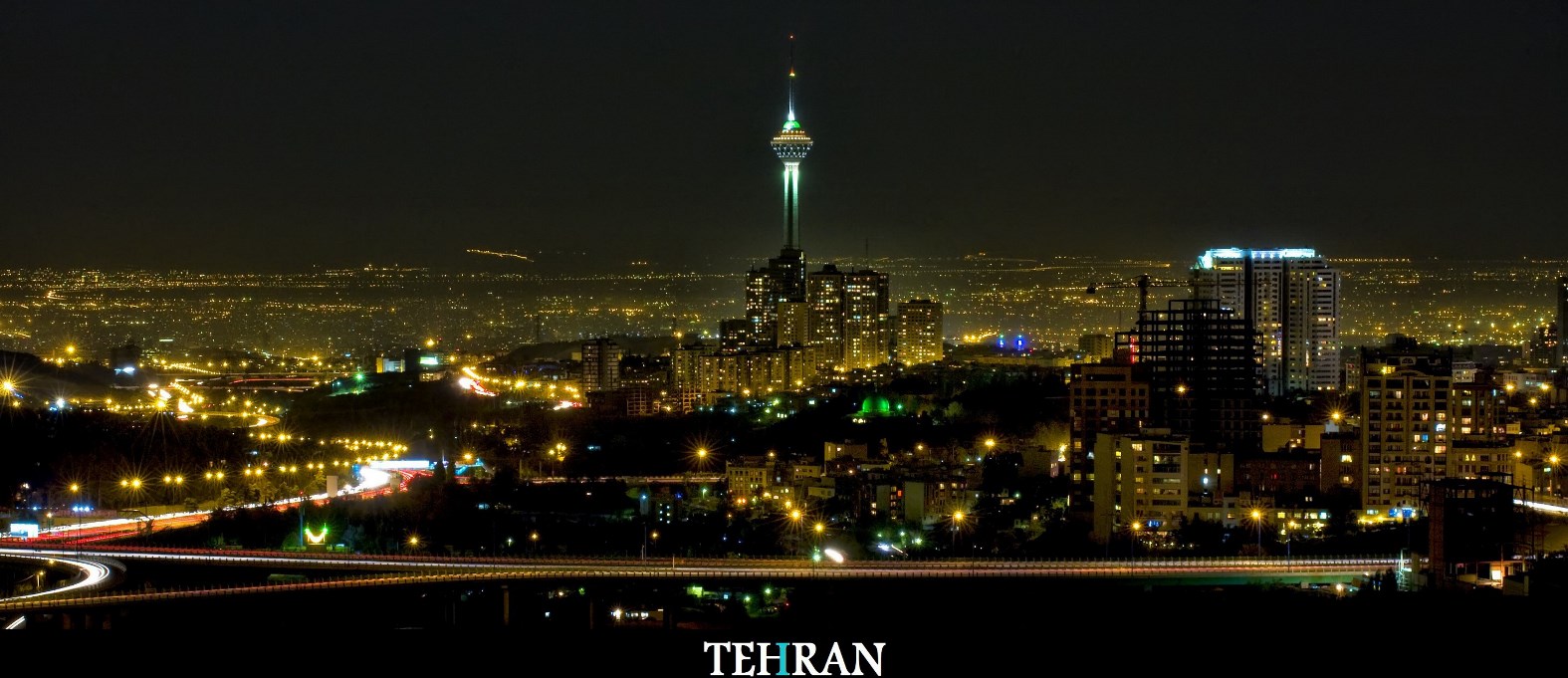
Join The Ultimate And Irreplaceable Experience Now.
Just define your interests, We will promote the best investment opportunities for you
Iran qualifies from many respects to be a good location for investment and doing business. it has huge potential for investing after the termination of economic sanctions, Some of the features are highlighted below:
1. Vast domestic market with a population of 80 million growing steadily
2. Young, educated and cheap labor force
3. Excellent strategic geographical position
4. The quick and easy access to neighboring markets with a population of 350 to 400 million
5. Developed and ready infrastructure
6. Cheap and abundant raw materials, energy and transportation
7. The four-season climate and climate variability in the country
8. Fiscal incentives
9. Security and political stability
10. Untapped and consumer market ..

The decision was amongst a slew of commercial measures taken by the India-Iran Joint Commission that met for the first time since Iran and the P-5+1 grouping struck a deal to end sanctions on Iran, reported The Hindu newspaper.
The Commission meeting was led by India’s External Affairs Minister Sushma Swaraj and Iran’s Finance Minister Ali Tayyebnia.
India decided to allow the Pasargad Bank and Parsian Bank of Iran to set up branches in New Delhi and Mumbai, added The Hindu.
“A major beneficiary of normalization of banking channels between two sides will be India which has just begun settling more than $6.5 billion energy-related pending payment, with Iran. Currently both Pasargad and Parsian conduct their transactions through the UCO bank of India,” reported the daily.
After the US and western powers in 2011 blocked payment channels toward Iran, the Reserve Bank of India created a channel for payment via Turkey.
The two countries also discussed measures to boost logistic services, including allowing freight forwarding companies (numbering around 5,500 in India) to take advantage of the rupee payment mechanism and the insurance cover that are currently available only to exporters and importers.
The Hindu further added that India and Iran have decided to hold preliminary discussions for a preferential trade agreement (PTA). The PTA is meant to ensure that both the countries will cut or eliminate duties on certain mutually agreed products to increase bilateral trade. A Joint Working Group will hold meetings to look at the feasibility of the PTA, the daily added.
Sources have also said Iran has sought investments from India in several sectors including engineering, agro-processing, petrochemicals, tea, pharmaceuticals and irrigation, besides infrastructure building— power and railways.

Mehdi Assali, Iran’s national representative to the Organization of Petroleum Exporting Countries (OPEC), has been quoted by the media as saying that Iran has no concerns over the falling prices given that even oil at $30 per barrel will push up the country’s economic growth by around five percent in 2016.
This, Assali said, is because Iran will double its current oil production next year after the removal of the sanctions.
He further said that OPEC member states still need a strong political will to reduce their supplies and give way to the incoming Iranian extra supplies. Their failure to do so, the Iranian envoy warned, will lead to further plunges in the prices, IRNA has quoted the Iranian envoy as saying.
Assali further said that Iran expects the prices of oil to remain between $35 to $50 in 2016. However, he stressed that the prices will not go anywhere above $60 in the next four years.
Iran has already emphasized that it will increase its oil production by 500,000 barrels per day (bpd) as soon as the sanctions against the country are lifted.
It says a further increase of 500,000 bpd could take place within a matter of months.
Iran’s production of oil stands at around 2 million barrels per day of which it can only export about 1 million barrels based on the current regime of sanctions.
Based on a nuclear deal that Iran agreed on with the P5+1 group of countries – the five permanent members of the Security Council plus Germany – back in July, Iran will restrict certain aspects of its nuclear energy activities in return for the removal of certain economic sanctions.
A key part of the sanctions that are expected to be removed are those that prevent foreign investment in Iran’s oil industry and also limit Iran’s oil exports.

As a late comer in the field, Iran is lagging behind in many aspects of the sector and there is no quick fix along this path which will require a lot of patience and perseverance.
Technology
Unlike railway tracks and gas pipelines, LNG requires very sophisticated technology. Today only some Western energy MNCs have mastered this technology. To transfer the know-how to develop the domestic LNG technologies we need to establish contacts with foreign science-based firms.
LNG is a type of cryogenic fuel which requires storage at extremely low temperatures in order to maintain it in liquid form. It is used in machinery that operates in space (e.g. rocketships and satellites), where traditional fuels cannot be used due to lack of atmosphere.
LNG was used by Russian aircraft manufacturer Tupolev Tu-154 model for the first flight in 1989. However the LNG industry in Russia is still at its infancy, with only one operational large LNG plant, Sakhalin-II. Project’s ownership: 50 percent Gazprom, 27.5 percent Royal Dutch Shell subsidiary, 12.5 percent Mitsui and 10% Mitsubishi subsidiary. Russia’s Yamal LNG plant in the North Pole is still under construction in partnership with Total. It is expected to come online in 2017.
By 2030 Russia aims to capitalize on 20 percent of the global LNG share. To do that they need information, experience and technological know-how. Moscow will host the third LNG Congress Russia 2016 from March 16-18. The forum will be attended by key industry leaders..
Cryogenic fuels are also environmentally cleaner than gasoline or other fossil fuels. Using LNG for transportation can reduce greenhouse gas rate by 11-20 percent. Moreover, LNG is non-pollutant, so if spilled it will evaporate and not contaminate the environment..
Today the trend of natural gas transportation and storage is moving towards LNG tankers and terminals.
Iran’s quest.
Iran’s had aimed to start exporting LNG at least 10 years ago. However, the program has been hampered by sanctions and mismanagement.
Now, that the sanctions’ removal is just a matter of weeks, there is a lot of catching up to do if the ambitions of LNG technology are to be realized. What’s important is that the government of President Hassan Rouhani is not sitting idle. Some preliminary steps have been taken in this long arduous road.
For starters Shana news agency reported on December six that Iran has established an LNG research institute in a bid to join the elite club of LNG producers. Vice President for Scientific and Research Affairs, Ali Vatani, will chair the LNG research institute, which will act as a bridge to connect university academia with the industry.
‘We have plans to establish a mini LNG pilot with the science and technology department in the Presidential Office which marks the birth of a specialized research institute in the field of LNG,” said NIGC Director of Research and Technology, Saeid Pakseresht.
Earlier in November the media reported Petroleum Minister Bijan Zanganeh was in discussion with the Belgian Secretary of State for Foreign Trade Pieter De Crem regarding partnership with Belgium’s Exmar to provide Iran with its first Floating LNG (FLNG) barge in Kharg Island.
In a related development Deputy Petroleum Minister Roknoddin Javadi informed that Iranian companies and a French firm have reached a final agreement on floating production of LNG.
The companies will form a consortium to build the Middle East’s first FLNG plant with a capacity to produce 1 million tons of LNG a year. The feedstock for the plant will come from gas currently being burnt, a process called flaring, at the Forouzan oil field which Iran shares with Saudi Arabia.
This would mark the first time in Iran for utilization of natural gas associated with oil production, instead of flaring it . The associated gas will be piped from the Forouzan field to an LNG facility on Kharg Island. The projected is expected to come online in two years.
Foreign companies are weighing $800 to one-billion-dollar investment to convert 200 mcf of associated gas to LNG a day, head of investment at NIOC, Ali Kardor said last month.
In another case of LNG technology development, NIGC Managing Director Hamid-Reza Araqi noted that an LNG liquefaction project is underway with 60 percent physical progress, expressing hope the project will be launched in the next one and a half years.
Iran expects to bring five LNG projects online in three years, including the above-mentioned liquefaction project. Royal Dutch Shell, Spain’s Repsol, and France’s Total abandoned three LNG projects in 2011 due to sanctions, banning supply of equipments, including high tech liquefaction articles. The removal of sanctions, expected in mid January, could breed new life into these projects.
During the Iran Petroleum Conference (IPC), held in Tehran Nov. 28-29, gas projects worth $185b were up for grab. The projects encompass a total of 226 trillion cubic standard feet (tcsf), which accounts for 19.1 percent of the country’s total gas reserves.
In February a follow-up conference on IPC will be held in London. Transfer of technology is among the clauses mentioned explicitly in IPCs.
Just acquiring LNG technology is not enough to reach the goal of becoming a major gas hub in the world. The production needs to keep pace with domestic consumption, the consumption itself has to be reduced by raising public awareness and increasing efficiency at power stations and distribution grids, auto industry, real estate, etc.
Iran exports natural gas to three neighboring countries including Azerbaijan Republic, Armenia and Turkey and will start exports to Iraq in the near future.
With the development of LNG technology Iran will not be confined to the neighboring countries only. With the Persian Gulf waterway it has access to all the markets in Asia without the need to lay railway tracks or gas pipelines.

Atrchian said that 3.954 million tons of the transited commodities were oil products with 4.847 million tons being non-oil goods.
Fuel, different chemicals, cotton, house appliances and food make up for the main non-oil commodities transited from Iranian borders, he said.
Atrchian said that the Port of Bandar Abbas was the most active border for transit of commodities into the country during the mentioned period.
He said that the Port of Imam Khomeini was the most active border for transit of commodities out of Iran.
The most transit of commodities by trucks through the Iranian borders during the nine-month period was the transit of goods from Iraq to the United Arab Emirates, according to the official.

Swaraj expressed her country’s eagerness to participate in the $5 billion Farzad-B gas field as soon as possible, asking Iran to expedite normal procedures to that end, The Economic Times reported on Tuesday.
She made the remarks after meeting Iranian Minister of Economic Affairs and Finance Ali Tayyebnia in New Delhi. Tayyebnia is visiting India for a bilateral Joint Commission meeting co-chaired by the Indian external affairs minister.
At the meeting, both sides signed a comprehensive agreement on cooperation in various fields, including energy, infrastructure, banking, consular affairs, trade and tourism.
In the Joint Commission meeting, Swaraj also stressed that connectivity afforded by Indian participation in Iran’s southern Chabahar Port will facilitate linking Afghanistan and Central Asia with India.
“The Iranian side suggested participation of India’s public and private sectors in development of Chabahar Port and Chabahar Free Trade Zone (FTZ).”
Indian companies have been in talks with Tehran since 2009 for developing the Farzad B gas field, estimated to hold over 13 trillion cubic feet of recoverable gas.

Asali said that after oil prices slump, foreign investors come to the Middle East due to low cost of oil production in the region.
The reason behind Iran’s economic growth is doubling of oil exports and gradual increase of prices in the next year, he said.
He said that estimates put oil price for the next year between 35 to 50 dollars.
He said that according to International Monetary Fund, even if oil prices fall to 30 dollars, Iran’s economic growth will stand at 4.5 to five percent.
Asali contended that oil prices in annual budget should be set considering realities on the ground as low oil prices in the budget will adversely impact the oil market.
Referring to increasing demand for oil next year, he said based on OPEC forecasts next year the figure is to stand at one million to 1.2 million bpd.
Demand for oil next year will reach over 94 million barrels from the current 93 million barrels, Asali said.
As to coming back of Iranian oil to market and OPEC’s move to prevent the oil price fall, he said that all OPEC members should foster consensus because they all know that continuation of the trend is not to their benefit.
Describing the countries’ political interests as the main contributor to oil price falls, the official said that Saudi Arabia, Kuwait and Qatar earn huge amounts of income from oil exports and Saudi Arabia currently suffers a loss of 180 million dollars a day.
Saudi Arabia has conditioned reduction of oil production on the same by Iran, Iraq and Russia, he said.
Currently, Iran exports one million bpd to China, India, South Korea, Japan and Turkey but lifting the sanctions will change the situation.

Talking to IRNA, Chitchian said some 47,000 to 50,000 MW of electricity should be added to the country’s electricity generation capacity within 10 years.
He said that the country needed to make significant investment to meet the goal.
‘The foreign investors are planned to finance roughly $28 billion of electricity projects in near future,’ he added.
Putting the current Iran’s electricity generation capacity at 73,000 MW, he added Iran needs to attract foreign investments to overcome its problems due to sanctions imposed against the county.

ISOICO Managing Director Hamid Rezaian said the agreement will allow his company to take advantage of the Russian firm’s facilities to produce certain equipment.
“We are ready to provide ISOICO with the necessary equipment thanks to financial and insurance support of the Russian government,” Red Barricades CEO Alexander Ilyichev said.
The deal was signed earlier this month in Tehran where representatives of 80 leading Russian companies showcased their products in the biggest foreign display of the kind ever held in Iran.
Under the agreement, the two sides will jointly build rigs for exploration and production of hydrocarbons in the Persian Gulf waters.
“The construction cycle is planned not for one year, but for decades,’ Ilyichev has told Russian media.
Ilyichev has said Iran was also interested in ordering new oil tankers for operation in the Caspian Sea.
Last month, Rezaian said his company was looking to the lifting of sanctions to unveil a series of grand projects in partnership with major world shipbuilders. Talks have been held with South Korean, Italian, Chinese, German and Turkmen companies to implement joint schemes.
Preliminary agreements have been reached with South Korea’s Hyundai Heavy Industries Co. and an MoU has been signed with Nordic Yards Wismar which is Germany’s biggest shipbuilder, Rezaian said.
Iran has a sprawling shipbuilding industry, chiefly devoted to constructing oil tankers and container ships as well as offshore structures.
The country owns the world’s largest fleet of oil supertankers consisting of 42 VLCCs, each able to carry 2 million barrels of oil.
According to Press TV, Iran also held a conference in Tehran last month to lay out 50 oil and gas projects worth $30 billion for development through foreign investment.
The projects include a combination of brown and green fields as well as exploration blocks up for development. Iran plans to boost oil production to 5.7 million barrels a day and gas output to 1.4 billion cubic meters a day by 2021.

Nasser Khormali focusing on provision of the required legal prerequisites for foreign banks presence in Iran said that presently the country’s high level monetary and banking sources, which include the High Council for Money and Credit and the Central Bank of Iran, have provided the legal basis for foreign banks’ presence in Iran.
‘The foreign banks’ branches need to be established in regions outside the Iranian Customs Organization’s domain; in other words, those banks must function outside the Iranian mainland and inside the free zones,’ he added.
He said that the High Council for Money and Credit is devising the set of rules and regulations for those banks.
Khormali added that after receiving requests from foreign banks in Iran at the Supreme Council for Iranian Free Zones, their requests will be forwarded initially to the secretariat of the council and from there to the Central Bank of Iran where the conditions and documents will be surveyed and the required licenses will be issued.
The director of Banking and Insurance Affairs of Supreme Council for Iranian Free Zones also said that the existence of rich resources in Iran, the termination of international sanctions and the emerging opportunities in Iran have all in all created golden opportunities for Iran to gain high benefits and the banking field is no exception in that regard.
He said that the foreign banks will offer all the regular services that the Iranian banks provide, in addition to some extra services such as offering finance deals, bringing to the country foreign currencies at lower costs, deciding their interest, loan, and partnership rates freely and their banking charges in accordance with the free market rules.

Iran Oil Ministry Director for OPEC affairs Mehdi Assali said that the oil price slump will bring investors to the Middle East given low cost of production in the region, SHANA said.
‘The production cost in Iran is less than 10 dollars for every barrel of oil,’ he said.
He estimated that Iran’s economy will see a 4.5% to 5% growth during the next Iranian calendar year which begins on March 21, even if the prices do not rise above $30 per barrel as the country will double its crude oil exports in 2016 and the prices will gradually grow during the year.
‘The prices will fluctuate between $35 and $50 in next years and there will be no worries regarding Iran’s oil income,’ he said.
Assali also predicted that the global demand for crude oil will exceed 94 million barrels per day in 2016.
Commenting on whether members of the Organization of Petroleum Exporting Countries (OPEC) can take measures to prevent further falling prices, he said: ‘OPEC members must reach a consensus in this regard because, economically speaking, every one of them knows that the downward trend in the prices does not benefit any of them, and it seems this is no more an economic issue, and needs a political determination [by the members].’
He further said the OPEC policy of producing as much oil as needed for squeezing unconventional producers out of the market has proved unsuccessful as production from American suppliers has not diminished and has even grown in several instances due to different reasons.
Italy’s Carlo Maresca on Saturday signed a $100-million contract with the Iranian organization to construct a solar power plant near Garmsar Special Economic Zone in the central province of Semnan. As per the deal, a 100-megawatt will be built on a 2,000-hectare area within 15 months, IDRO’s official website reported….
Iran says credit line with Russia to boost trade Iran’s Minister of Economy and Financial Affairs Masoud Karbasian. Iran says it expects a recent agreement with Russia over the creation of a credit line to fund Iranian projects to help promote trade between the two countries. Iran’s Minister of Economy…
Iran huge rise in imports from Europe Iran has reported a major rise in imports from several key European countries over a period of nine months starting 21 March 2017. As Iran is celebrating the second anniversary of the removal of sanctions, figures show the country’s imports have been picking…
Iran opens third DRI steel mill using domestic technology Neyriz Steel Complex at the time of commissioning. Iran has brought online its third steel plant which uses domestic technology for production of direct reduced iron (DRI) or sponge iron. The hot commissioning of Neyriz Steel Complex in the southern Fars…
With better risk rating, Iran now stands next to Brazil The Organization for Economic Cooperation and Development (OECD) has improved Iran’s risk rating by one notch. Iran’s media are reporting that the country’s risk classification has improved by one notch in a vital sign of improved investment environment. The English-language…
PSA invites Iran Khodro to produce Peugeots in Algeria Iran Khodro logo French carmaker PSA Group has invited Iran Khodro (IKCO) to set up a production line for Peugeot cars in Algeria, the Islamic Republic News Agency (IRNA) reports. PSA executive vice-president for purchasing, Yannick Bézard, on Tuesday visited Tehran-based…
Just define your interests, We will promote the best investment opportunities for you


