Join The Ultimate And Irreplaceable Experience Now.
Just define your interests, We will promote the best investment opportunities for you
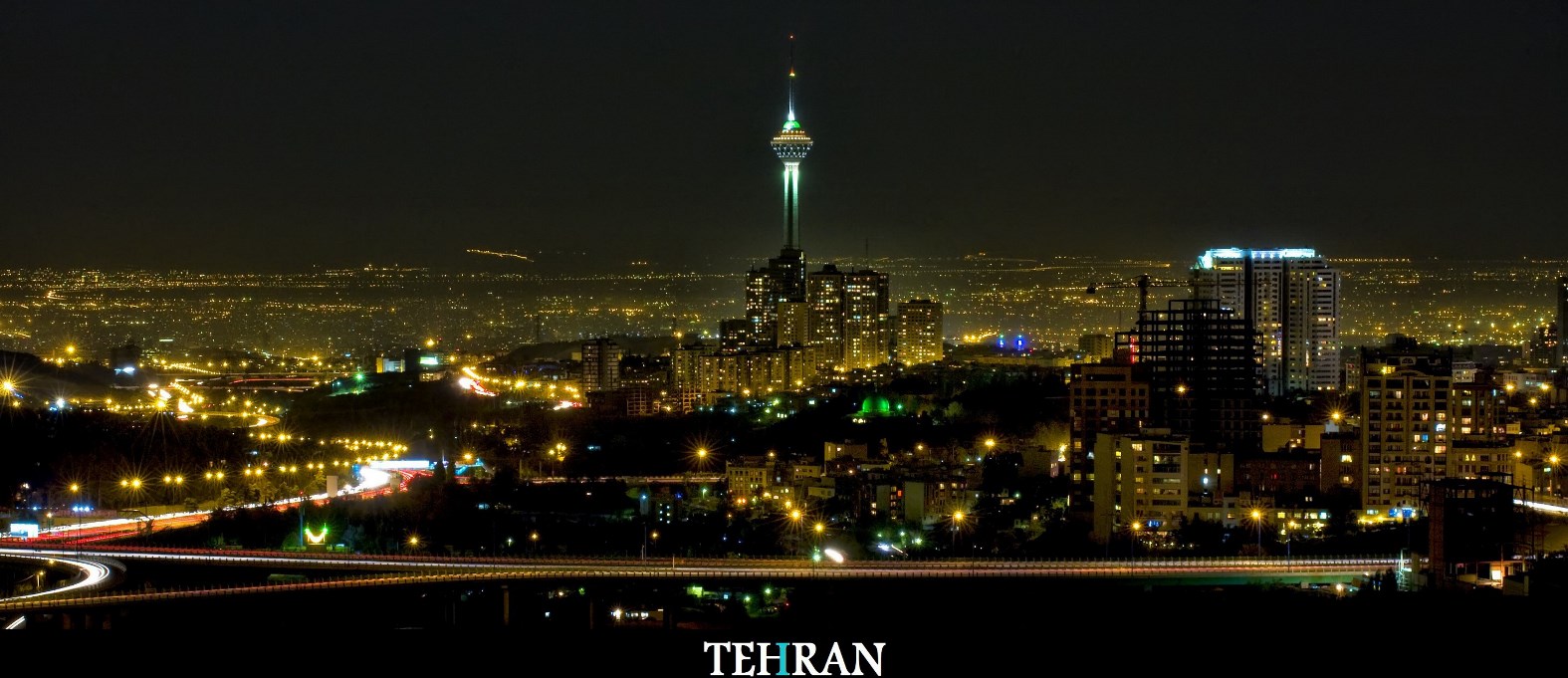
Iran qualifies from many respects to be a good location for investment and doing business. it has huge potential for investing after the termination of economic sanctions, Some of the features are highlighted below:
1. Vast domestic market with a population of 80 million growing steadily
2. Young, educated and cheap labor force
3. Excellent strategic geographical position
4. The quick and easy access to neighboring markets with a population of 350 to 400 million
5. Developed and ready infrastructure
6. Cheap and abundant raw materials, energy and transportation
7. The four-season climate and climate variability in the country
8. Fiscal incentives
9. Security and political stability
10. Untapped and consumer market ..

India is ready to import Iran’s oil as much as it was in the pre-sanctions era, Marziye Riahi, head of Iran’s energy working group delegation to New Delhi told IRNA.
Before the sanctions imposed on Iran, Tehran was providing 16 percent of New Delhi’s oil needs, said she, adding the figure reached 6 percent due to obstacles created by bans on Iran.
The Indians have asked National Iranian Oil Company to concede development of Iran’s Farzad B gas field to them in the post-sanctions era, she said.
On December 15, the International Atomic Energy Agency (IAEA) Board of Governors adopted a landmark resolution on Iran possible military dimensions (PMD) case.
On that day, the IAEA Board of Governors voted in favor of a draft resolution proposed by the six world powers to declare end to investigations into Iran’s nuclear activities in the past.
So, it is predicted that time of lifting anti-Iran sanctions will be in the next few days as it was agreed after the July 14 nuclear agreement between Iran and P5+1- the US, Britain, France, Russia and China plus Germany.
According to the agreement, better known as the Joint Comprehensive Plan of Action (JCPOA), limits will be put on Iran’s nuclear activities in exchange for, among other things, the removal of all nuclear-related economic and financial sanctions against the country.

He made the remarks in a meeting with managing director and senior officials of Qeshm Free Zone Organization.
The ambassador said that more than 80 percent of executive works for oil and gas swap from Qeshm Island to Omani port of Sahar have been carried out.
Al-Birwani said that closeness and geographical vicinity between Oman and Iranian Qeshm Island has prepared the ground for trade and swap of oil, gas and tourism cooperation.
Termination of sanctions on Iran in the next 10 days, an opportunity to increase bilateral trade exchanges will emerge, the ambassador said.
Referring to enhanced level of diplomatic ties between Oman and Iran in the past two years, he expressed hope that the new Christian year would be a booming year for trade and comerce.
The ambassador said that the Omani port of Sahar attracted 13 billion dollars foreign investment.
An Omani economic delegation met with managing director of Qeshm Free Zone Organization last September to negotiate establishment of direct shipping lane between Oman and Qeshm Island.
Holding exhibition, formation of cross-border market, exchanging university professors and students, convening conferences on cultural heritage, tourism to draft contracts between Iran and Oman and organizing cultural tours and delivery of medical services for the tourists were among issues discussed in the meeting.
Sultanate of Oman located 60 kilometers south of Qeshm Island.

Hermes had previously guaranteed some loans for Iran but the country was unable to meet its commitments due to the international sanctions and lack of access to SWIFT interbank messaging service.
‘We have agreed to pay Hermes over $500 million over the course of one year as soon as the economic sanctions are eased,’ Khazai told Fars News Agency.
He referred to the ministry’s efforts to absorb foreign investment in the post-sanctions era, saying that the Central Bank of Iran and the Ministry of Economy have held talks with several credit guarantee institutions over the matter.
‘Russia’s Finance Minister Anton Siluanov has promised to establish a $2 billion credit line for Iran in one of that country’s well-known banks,’ Khazai said.
‘We have held some preliminary talks with EKF, Denmark’s official export credit agency, the Italian SACE group, the German Euler Hermes and the UK’s Export Finance to prepare the grounds for persuading international banks and lending institutions to grant credit to and establish credit lines for Iran.’
These institutions guarantee the international banks’ resources, credit lines and finance projects in different countries or invest in them directly, according to the official.
He explained that the ministries or state-run companies which need financing for infrastructure projects in transportation, energy, agriculture, water resources management and the likes can present their schemes and technical details to the ministry and the banks. After the necessary assessment the funds will be allocated he foreign credits.
Khazai stressed the importance of attracting foreign investment and noted that ‘Iran’s economy has got a good potential for investment’ and is appealing to foreign investors. ‘Iran aims at absorbing investments that would help create and develop competitive markets and improve exports.’
He stressed the necessity of developing infrastructure, importing machinery and equipment and specialized knowledge through foreign investment.
In absorbing foreign investment the priority is with FDI as it does not add to the country’s foreign debts, according to the senior official. ‘However foreign investors are not willing to invest in some projects directly and that’s when we have little option but to go for foreign financing instead of FDI.’
Entering Int’l Markets
Another key priority for Iran’s economic policymakers is to prepare the grounds for reconnecting to the world economy and entering international markets according to Khazai. ‘Iran’s credit rating among the members of Organization for Economic Cooperation and Development is at the lowest. Therefore we should negotiate with international rating agencies to improve our credit rating.’
Iran is talking with the UK over the Royal Dutch Shell’s debts to Iran. ‘The British have agreed to repay $3 billion of the company’s debts to Iran as soon as the sanctions are lifted.’
He said Iran’s total debt to international financial institutions is less than $3 billon and ‘this is proof that Iran has a good reputation and meets its commitments despite the economic sanctions.

He said that with the current 1m bpd output, if the oil prices reduce to lower than 30 d/b and Iran will have to sell its crude oil for 25 d/b, the country’s annual oil revenues will reach dlrs nine billion.

Today’s low energy, mineral and other commodity prices are expected to stay stagnant until the end of the decade. Producers of natural gas are expected to ride this storm out because a bright future awaits the industry.
Due to the weak economic growth in Asia economies, cheap coal, the partial return of nuclear power in Japan and the ever-expanding glut of shale gas supply from North America, today we are witnessing record low prices for natural gas.
According to the Canadian Association of Petroleum Producers (CAPP), world trade in Liquid Natural Gas (LNG) has more than tripled over the last 20 years. Being the cleanest fossil fuel on earth, with the lowest environmental imprint, natural gas is expected to replace coal and in many cases gasoline.
During the November summit of Gas Exporting Countries Forum (GECF), members were presented with the Global Gas Model. Secretary General of GECF Mohammad-Hossein Adeli: ‘It is a technically advanced model which is designed to forecast market behavior based on the facts from 133 countries, their fields and wells.’
The Global Gas Model took two years to design, takes over 60,000 variables from different countries to analyze and forecast future possible scenarios. According to this global gas model the primary demand could increase by 58 percent over the next 25 years. This means gas share of the fuel mix between 2014 and 2040 could rise from 21 percent to 25 percent.
Liquid Natural Gas (LNG) technology has made transportation of natural gas more feasible and has made extraordinary contribution in the global penetration of this form of energy in the world.
For the environmentally conscious readers most of the development in the first world has been due to the coal powered industry. Now the same tradition is followed by the third world and emerging economies. Considering the population, high economic growth rates and development, using coal in these countries simply means disaster.
According to Exxon Mobile the global gas demand will soar 65 percent by 2040. This demand will be driven by population growth, improved living standards and expanded urbanization.
Today only 20 percent of power generators are run on natural gas. However, natural gas will run 30 percent of world’s power generators by 2040 when demand for electricity is expected to be 80 percent higher than today.
There is a need to wean off the emerging world economies from coal powered energy. The developed world has the moral responsibility to transfer more efficient industrial technology to the third world. Here, everyone’s future is at stake.
Moreover, at the COP21 Climate Change Conference world leaders signed an agreement which establishes an obligation for industrialized countries to fund climate change for poor countries, while developing countries are required to contribute on volunteer basis. The best contribution in this case is the transfer of clean and more efficient technology.
Shale gas
Shale gas is recovered by the process of hydraulic fracturing (also called fracking) has elevated US from a net importer of LNG to the status of largest producer and a major exporter of natural gas today. Oil is also produced using fracking and it is the dirtiest fuel in the market today. On
December 20 Congressional approval ends a long-standing oil export ban in the U.S.
The US has kept Iran from developing its LNG export industry for the past 15 years, which in turn gave its own extractive industries an opportunity to fill market demand that would have been available for Iranian LNG exports.
Australia’s LNG projects are expected to come on stream in 2017. Australia also uses fracking to separate natural gas from shale.
There are regular protests on the use of fracking method to obtain oil or gas because of its expensive environmental imprint. Yet the US and Australia are positioning themselves for the rise in LNG trade and are expect to supply almost 50 percent of global LNG by 2020.
Shale gas is only the answer for some greedy and powerful oil companies who will disappear when the ecological disaster of fracking will begin to surface. It could be even worse. Once they realize this is not the way of the future and after the fall of their share prices, hope they don’t expect government bailout.
Worth mentioning is that renewable energy cannot replace natural gas as a fuel stock in many key areas such as industry, petrochemicals, chemicals and to a degree heating.
Natural gas is the best viable alternative for keeping the wheels of the industries rolling for the time being, at least until more sustainable alternative sources of energy are developed.
Why chill and shrink LNG?
Cooling LNG at temperatures of minus 162 degrees Celsius (-260F) shrinks its volume 600 times, making it easier to store and ship. Thus 600 cubic feet of methane gas will shrink to a volume of 1 cubic feet of clean and odorless LNG.
It is similar to reducing the volume of a beach ball to the volume of a ping pong ball.
Once cooled the LNG can be transported using special tankers to its destination. Upon arrival LNG is warmed to its original gaseous state at a gasification terminal located in a port for loading/offloading from LNG tankers. Once offloaded transmission networks can be used for heating or cooling homes, generating electricity and fueling machinery.
Alternative transportation modes for natural gas are pipelines and railways. The former takes a long time to build and requires geopolitical security, while the later has all the same drawbacks plus it is simply more expensive.
LNG is different from crude oil. Due to its low temperatures while in liquid form, it is less prone to burning and exploding.
In an unlikely event of spill on water or land, the LNG would vaporize and dissipate into the atmosphere with little to no residue.
LNG is odorless, colorless, non-corrosive and non-toxic.
Natural gas is the world’s cleanest burning fossil fuel and the Islamic Republic has the biggest proven reservoirs in the world.
Unlike the shale gas produced in the US and Australia, the process of gas recovery in Iran is safe, environmentally friendly and cost effective. LNG development is an important strategic way for Iranian natural gas to play an important role in filling the global energy demand.

The remarks were made on Sunday evening at a banquet in honor of the visiting Iranian finance minister.
Formation of economic cooperation councils is a good ground for further bilateral relations, Tayyebnia said.
He then urged the two sides to implement the mutual agreements as soon as possible.
Iranian and Indian governments respect each other and the two nations are for the peace, Tayyebnia added.
On the nuclear agreement known as the Joint Comprehensive Plan of Action (JCPOA) between Iran and the six world powers, Tayyebnia said it is a proper opportunity for expansion of ties between the two countries.
Unfortunately, he said, anti-Iran sanctions in the past had created obstacles to Tehran-New Delhi relations.
He further encouraged the foreign investors including the Indians to make investment in Iran.
About regional developments, he said there is no good or bad terrorism, adding that insecurity has endangered economic growth in all regional states.
Iran condemns any kind of aggression and violence, he stressed.
Tayyebnia leading a delegation, arrived in the Indian capital on Friday for Iran-India economic commission meeting.
Today, he is to confer with a number of economic and political officials in this country on ways to promote bilateral cooperation.

‘The Government will deliver the budget bill to the Parliament next week,’ said Moazzami in a Conference of the Oil Products Exporters.
The Head of the Budget and Planning Organization Mohammad Nobakht had on Wednesday, December 23 announced that President Hassan Rouhani’s Cabinet will deliver the Budget to the Parliament within two weeks.
In current Iranian year, 1394 Budget the national economy’s dependence on oil money had decreased from the previous year’s 40% down to 32% and the crude oil sale price was fixed at 70 dollars per barrel.

In an exclusive interview with IRNA here on Sunday, he made the remarks in response to a question about the claim of “attractive discounts” Iran is said to be offering after the removal of sanction to regain its share of international market.
He said Iran will offer discount which is regular and customary in oil markets.
The minister stressed that increasing the volume of its oil exports is the main priority for Iran after the removal of sanctions, noting that Tehran is aiming to go back to the level of its pre-sanctions exports.
In the past few days, certain media have repeatedly claimed that Iran is planning to sell its oil at huge discount.
Zangeneh had already announced that Tehran will add 500,000 barrels of oil per day to its current production by January after lifting of the anti-Iran sanctions.
‘Following the latest report of Director General of the International Atomic Energy Agency Yukiya Amano on Iran’s nuclear activities, it is expected that Iran will add 500,000 b/d to its oil production by the end of the current (Christian) year or early January,’ Zangeneh told reporters.
After a short while, he added, Iran would raise an additional 500,000 b/d to one million.
‘Our plans for increased productions are non-negotiable as we want to return to our previous level of production,’ stressed the Iranian minister.
He also said Iran did not need the permission of any country to increase its crude oil production.
Iran has officially announced that it will increase production for 500,000 barrels a day immediately after sanctions are lifted. Another increase of similar amount will follow within weeks so that Iran’s export will be back to the pre-sanctions quota.

Speaking at an international conference on maritime industries and shipping in Kish Island, south of Iran, on Thursday, Ali Akbar Safaei said NITC tankers can transfer 15.5 million tons of items at the same time which is unparalleled in the world, making it the largest tanker company in the whole world.
NITC has put behind years of sanctions and is bracing for reviving its international presence in high seas, Shana quoted him saying.
The NITC chief also said Iran will renew its maritime activities through NITC in the post-sanctions setting.
‘NITC enjoys a rich background in the European markets by offering quality services to its customers and is ready to renew its presence to offer safe and inexpensive services to world markets,’ Safaei added.

“We have reached an overall consensus that expansion of tourism is vital for Iran to expedite sustainable development and increase employment,” said Rahmani Movahed at a groundbreaking ceremony for the largest tourism and recreational complex of Sirjan, in Kerman Province.
According to Tehran-based English newspaper, Iran Daily, the official said tourism industry would provide Iran with sustainable earnings.
“Tourism industry generates nine percent of global GDP whereas in Iran, tourism is responsible for 6.5 percent of the GDP,” he noted.
Rahmani Movahed said Iran has made ceaseless efforts to promote tourism following the agreement with P5+1 on the Joint Comprehensive Plan of Action (JCPOA).
Noting that Sixth Development Plan (2016-2021) has placed great importance on expansion of tourism, Rahmani Movahed said Iran is to host the 2017 World Federation of Tourist Guide Association in line with the development of the tourism industry.
The official described southern Kerman Province as one of the most attractive provinces in Iran, whose three historical sites namely Bam Citadel, Shahzadeh Garden, and Pre-historical Meymand Village, have been registered on the UNESCO World Heritage List.
“Cisterns of Kerman and Lut Desert, known as ‘Kavir-e Lut’, will soon be registered on the World Heritage List,” he said, explaining that Kavir-e Lut is Iran’s first natural attraction up for global registration.
The official said the number of foreign visitors to Kerman Province has witnessed a growth of between 30 and 35 percent over the past two years.
“Kerman has an important role in the growth of tourism industry,” he said.
Italy’s Carlo Maresca on Saturday signed a $100-million contract with the Iranian organization to construct a solar power plant near Garmsar Special Economic Zone in the central province of Semnan. As per the deal, a 100-megawatt will be built on a 2,000-hectare area within 15 months, IDRO’s official website reported….
Iran says credit line with Russia to boost trade Iran’s Minister of Economy and Financial Affairs Masoud Karbasian. Iran says it expects a recent agreement with Russia over the creation of a credit line to fund Iranian projects to help promote trade between the two countries. Iran’s Minister of Economy…
Iran huge rise in imports from Europe Iran has reported a major rise in imports from several key European countries over a period of nine months starting 21 March 2017. As Iran is celebrating the second anniversary of the removal of sanctions, figures show the country’s imports have been picking…
Iran opens third DRI steel mill using domestic technology Neyriz Steel Complex at the time of commissioning. Iran has brought online its third steel plant which uses domestic technology for production of direct reduced iron (DRI) or sponge iron. The hot commissioning of Neyriz Steel Complex in the southern Fars…
With better risk rating, Iran now stands next to Brazil The Organization for Economic Cooperation and Development (OECD) has improved Iran’s risk rating by one notch. Iran’s media are reporting that the country’s risk classification has improved by one notch in a vital sign of improved investment environment. The English-language…
PSA invites Iran Khodro to produce Peugeots in Algeria Iran Khodro logo French carmaker PSA Group has invited Iran Khodro (IKCO) to set up a production line for Peugeot cars in Algeria, the Islamic Republic News Agency (IRNA) reports. PSA executive vice-president for purchasing, Yannick Bézard, on Tuesday visited Tehran-based…
Just define your interests, We will promote the best investment opportunities for you


