Join The Ultimate And Irreplaceable Experience Now.
Just define your interests, We will promote the best investment opportunities for you
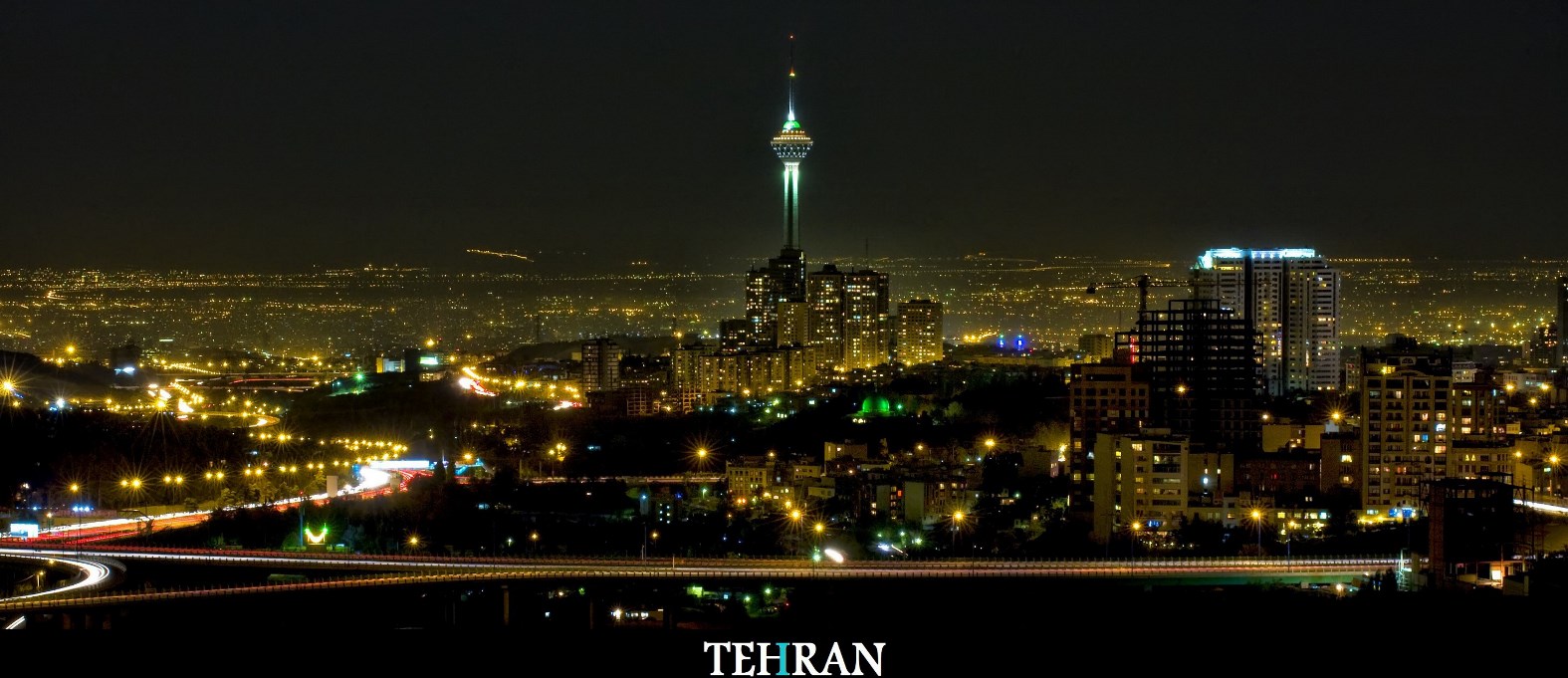
Iran qualifies from many respects to be a good location for investment and doing business. it has huge potential for investing after the termination of economic sanctions, Some of the features are highlighted below:
1. Vast domestic market with a population of 80 million growing steadily
2. Young, educated and cheap labor force
3. Excellent strategic geographical position
4. The quick and easy access to neighboring markets with a population of 350 to 400 million
5. Developed and ready infrastructure
6. Cheap and abundant raw materials, energy and transportation
7. The four-season climate and climate variability in the country
8. Fiscal incentives
9. Security and political stability
10. Untapped and consumer market ..

Manturov, who returned from a Tehran visit recently, in an interview with Russian State TV Channel 2 on Saturday, said that considering high volume of trade exchange between the two counties possibility to begin to pay commercial debts by rial and rubble is high.
He predicted an increase in the volume of trade exchange between the two countries and the possibility for Iran to buy Russian goods with rubble.
Iran’s Minister of Communication and Information Technology Mahmoud Vaezi said last Tuesday on the sidelines of meeting with Manturov that Tehran and Moscow were to sign a monetary deal to ease exchange of rial and rubble to facilitate economic cooperation.
Manturov predicted that commercial exchange between the two countries may reach five billion dollars in five years.
According to Russia Customs House information, commercial exchange volume between Iran and Russia in 2014 stood at 1.6 billion dollars.

Javadi said that after removal of sanctions, Iran will regain its share in the world oil markets.
He said OPEC members’ non-cooperation is feared to lead to continued falling prices on the markets.
He noted that the OPEC members should produce crude within the framework of their specified quotas because after lift of sanctions, Iran will start increasing its crude output.
‘We are ready to increase daily crude production capacity one week after lift of sanctions and after six months, adding half a million more barrels to the production and export capacity,’ he said.
To a question whether the oil market can absorb such an increase in exports, he said if the OPEC members adhere to their quotas, the oil market worldwide will appeal for it.
Asked how Iran would regain its quota with regards to the ongoing oversupply governing the market, he said, ‘Now agreements have been reached with the purchasers on selling our crude and possibly in case of refusal of the OPEC members, the oil price will continue to fall.’
He believed that ending the ban on US crude exports and in general increase in the supply in the world markets would affect more the countries which produce oil at high costs.
As for impact of Daesh terrorists’ oil sale at low prices, he said based on the media information, the sale is not at a level to affect the market and it is unlikely that it would play a major role in this concern.
Prior to intensification of sanctions Iran used to export more than two million barrels of crude a day but now the exports have reached one million barrels per day.
Petroleum Ministry has over the past weeks ordered the oil producing companies to be ready for increasing the production and the exports after lift of sanctions.

‘The US produces light, sweet crude oil that will not be a good substitute for Iran’s crude oil supplies,’ said Mehdi Assali, OPEC affairs director of Iran’s petroleum ministry, according to Shana news agency.
Therefore, the US crude oil will not endanger Iran’s oil market after the sanctions removal, he said.
The US imports 7m bpd which makes it the biggest oil importer in the world that does not have much crude supplies to offer to world markets, he added.
Assali said the end of the ban is not good news to producers of costly oil and those that produce oil with similar quality with that of the US like Nigeria and Angola, but for Iran, given the quality of its oil, there will not be much explicit impact on its markets.
The US Congress voted earlier this month to repeal the 40-year-old ban on exporting US crude oil. Congress, concerned about US dependence on imported oil, imposed the crude oil export ban after the Arab oil embargo of the early 1970s.
On Thursday, Russian Energy Minister Alexander Novak said the United States’ decision to lift a ban on oil exports should not affect the global oil market.
‘This should not affect the market, this country (the United States) is an importer, it needs to buy oil on the market itself,’ Novak told reporters.
Regarding, the US Federal Reserve’s promise of gradual rate hikes, the Iranian official said the hikes will reduce US’s oil inventories.
‘This rate hike will affect the US dollar against other currencies and will boost the cost of commercial inventories in the country,’ he said.

According to dispatches, the IMF report said that there needs for “major adjustments” in the fiscal policies of the Persian Gulf states and Algeria, economies that are heavily reliant on oil sales.
The warning comes as $500 billion in revenue have been lost this year by Middle East oil exporters due to the sustained decline in global energy prices, according to IMF estimates.
Some countries in the Middle East, including the UAE and Saudi Arabia, have introduced some fiscal changes to counter the drop in oil revenue, but the IMF says more needs to be done.
The Persian Gulf states include the United Arab Emirates, Bahrain, Kuwait, Oman, Qatar and Saudi Arabia.

“Iran will win back its global market quota in the post-sanctions era. Lack of cooperation by OPEC members can lead to further decline in global oil price,” Rokneddin Javadi told Shana.
He urged OPEC members to keep their production within the slated quota because Iran will increase its production after lifting of sanctions. “As I announced earlier, we are ready to increase export for 500 barrels a day and in less than six months will expand it above 2 million barrels.”
To a question on whether oil market can take in addition of Iran’s increase, he replied, “The global market can digest it provided that OPEC members commit themselves to their quotas.”
“We have reached agreements with the customers to sell our oil,” he added, “It is likely that with OPEC members’ lack of cooperation, oil prices will be negatively affected and drop further.”
When asked whether current trend of falling oil prices can affect Iran’s export of oil, Javadi said, “Due to low production cost of oil in Iran, the dropping oil prices will not hamper oil exports of our country.”
“US lifting ban on oil export and increased supply in the global market can affect those countries in which oil is produced with higher finished cost,”
He ruled out that smuggling oil by Daesh terrorist group can further lower oil prices as its quantity is not as sizeable as disturbing the market.
“It is unlikely,” said NIOC managing director.

In a meeting with head of Tehran Chamber of Commerce, Industries and Agriculture Masoud Khansari, he said that Australia pays no attention to the proclaimed restrictions and its trade delegation is planning to visit Tehran.
‘Iran and Australia are strong in the filed of mineral undertakings and the area is able to have numerous exchanges,’ he said.
Earlier, many Australian companies operated in Iran but they shrank their activities due to severe sanctions and eventually they completely halted their work, he said.
According to Foley, Australian firms are eager to return to Iran.
The Australian envoy also said that his country is ready for cooperation with Iran in various sectors such as agriculture, education, mines and mining industries, oil, gas and service relating to the industries.
Canberra is interested to see the country’s economic activists visit Tehran to sit for talks with their commercial partners, Foley said.
Expressing optimism towards Iran-Australia relations, he contended that the two countries have suitable understanding about each other which will help promote mutual cooperation.
Khansari, for his part, recalled the history of Iran-Australia trade relations, saying that their trade ties were excellent in recent years but they fell due to the sanctions.
He said that after the approval of Joint Comprehensive Plan of Action (JCPOA), some 80 trade delegations from European and Asian countries flocked to Iran but no Australian delegation has yet entered Iran.
It seems that the country’s economic activists have adopted conservative stance, he said.

While shooting down a Russian warplane, the Turkish Air Forces were apparently unaware that they were taking aim at their country’s economy at the same time, France TV reported.
Following the incident, Moscow retaliated by imposing sanctions against Ankara, targeting four sectors of Turkey’s economy: the construction and power industries, agriculture and, of course, tourism, according to Sputniknews.
The France TV pointed out that previously Russia used to be Turkey’s second-largest source of tourists, with 4.12 million Russians visiting the country in 2013 and 4.3 million in 2014.
However, in the aftermath of the Su-24 incident, all major Russian travel agencies have put a stop on selling tours to Turkey as the Russian Foreign Ministry warned of a serious risk of a terrorist attacks there, the broadcaster remarks.
In the meantime, other countries seek to capitalize on this opportunity by wooing Russian tourists.
‘Due to the international problems, this (tourism) market share could be attracted to Italy. All that needs to be done is to reach out for the goal,’ said Alessandro Casula, head of the Russkiy Kliuch (Russian Key) organization which ranks Italian hotels according to how well they cater to the needs of Russian tourists (Russian-speaking personnel, Russian menus etc.), told France TV.
As for Turkey, at first the Russian sanctions will only have a limited effect on the Turkish economy, but if the “boycott in the name of safety” continues, in three months Ankara will begin sustaining serious losses, the French broadcaster said.
So far, Turkey lost 4.4 percent of its tourism revenues, amounting to some $12 billion, in the third quarter of this year.

Tayyebnia, who is in India to attend joint economic commission meeting told IRNA here on Friday that the commission will consider and discuss issues of mutual interest and economic cooperation.
He added that India, with a population of over 1.200 billion, is ready to invest in many Iranian projects.
Tayyebnia added that the commission discuss and exchange views on different fields of economic cooperation in different sectors of port, road, railroad, petrochemical and factory construction.
There are representatives from different ministries such as Road and Urban Development Ministry, Petroleum Ministry and Central Bank in Iranian delegation, who will discuss development of relations with their Indian counterpart for post-sanction era, Tayyebnia added.
Tayyebnia and accompanying delegation arrived in New Delhi on Friday morning.

Talking to reporters at the end of the Third Meeting of Caspian Seal littoral States Transportation Ministers in Tehran, he said that all five Caspian Sea littoral countries stressed the need for facilitating visa issuance for drivers and visitors.
‘We need a suitable legal regime to be able to promote transportation among Caspian Sea littoral states,’ Akhoundi said, hoping that it will be achieved in the next meetings.
Under the current situation, regulating the air, sea, land and rail transport among Caspian Sea littoral states is essential and all the countries should contribute to the development of multimodal transportation in the region, he said.
The minister said that Caspian Sea littoral states have longstanding ties with each other and they are determined to promote transport cooperation.
Describing transit among the countries as significant for all-out cooperation, he said that the ministerial meeting discussed avenues for boosting transit in Caspian Sea eastern corridor and completion of connecting routes in west corridor.
The third meeting Caspian Sea transport ministers wound up on Wednesday.
Representatives from Azerbaijan Republic, Russia, Kazakhstan and Turkmenistan convened in Tehran to study promotion of transport cooperation among Caspian Sea littoral states.
Two earlier meetings were held in Baku and Astarkhan respectively.

“Neighborhood of Iran and Russia considering their hold on strategic gas resources as well as determination of the two countries’ political leadership are significant reasons which can create appropriate opportunities in their bilateral relations,” he said at a meeting here with Managing Director of the National Iranian Gas Company (NIGC) Hamid-Reza Araqi.
“Gazprom has useful and precious experience in various fields of the gas industry and can provide them to the NIGC,” Shana quoted him saying.
“We are interested in turning the initial agreements to a memorandum of understanding which can be signed next year,” Medvedev added.
“It is evident that the world needs gas and that Iran and Russia can use such a rich capacity to pursue their joint objectives in this field,” NIGC managing director said following the meeting.
“NIGC has considerable experience, for example, in construction of gas pipelines, storage facilities, and gas refineries and can cooperate with Gazprom in these areas,” he said.
The two delegations were planned to negotiate implementation of agreements reached on joint engineering, operation, commercial, and research projects, said NIGC director of international relations, Azizollah Ramezani.
“NIGC and Gazprom will hold several rounds of talks to review cooperation areas under five committees,” he said prior to the first round of meetings with the 25-member Russian delegation.
Italy’s Carlo Maresca on Saturday signed a $100-million contract with the Iranian organization to construct a solar power plant near Garmsar Special Economic Zone in the central province of Semnan. As per the deal, a 100-megawatt will be built on a 2,000-hectare area within 15 months, IDRO’s official website reported….
Iran says credit line with Russia to boost trade Iran’s Minister of Economy and Financial Affairs Masoud Karbasian. Iran says it expects a recent agreement with Russia over the creation of a credit line to fund Iranian projects to help promote trade between the two countries. Iran’s Minister of Economy…
Iran huge rise in imports from Europe Iran has reported a major rise in imports from several key European countries over a period of nine months starting 21 March 2017. As Iran is celebrating the second anniversary of the removal of sanctions, figures show the country’s imports have been picking…
Iran opens third DRI steel mill using domestic technology Neyriz Steel Complex at the time of commissioning. Iran has brought online its third steel plant which uses domestic technology for production of direct reduced iron (DRI) or sponge iron. The hot commissioning of Neyriz Steel Complex in the southern Fars…
With better risk rating, Iran now stands next to Brazil The Organization for Economic Cooperation and Development (OECD) has improved Iran’s risk rating by one notch. Iran’s media are reporting that the country’s risk classification has improved by one notch in a vital sign of improved investment environment. The English-language…
PSA invites Iran Khodro to produce Peugeots in Algeria Iran Khodro logo French carmaker PSA Group has invited Iran Khodro (IKCO) to set up a production line for Peugeot cars in Algeria, the Islamic Republic News Agency (IRNA) reports. PSA executive vice-president for purchasing, Yannick Bézard, on Tuesday visited Tehran-based…
Just define your interests, We will promote the best investment opportunities for you


